Managing a Large, Geographically Dispersed and Operationally Critical Workforce

Madhya Pradesh Madhya Kshetra Vidyut Vitaran Company Limited (MPMKVVCL) manages a workforce of more than 25,000 employees, deployed across headquarters, regional offices, circles, divisions, substations, and extensive field locations throughout Madhya Pradesh. These employees perform mission-critical functions related to power distribution, maintenance, fault rectification, billing support, and customer services, often operating in shifts and remote or high-risk environments. Managing such a large and operationally critical workforce required precise coordination, discipline, and real-time oversight. However, the absence of a centralized digital HR system made it difficult to uniformly administer attendance, leave, payroll, transfers, and service records across this vast organizational structure. Senior management lacked real-time visibility into workforce deployment and attendance patterns, while HR teams struggled to maintain consistency and accuracy at scale. This created a pressing need for a system that could handle organizational complexity while supporting operational continuity.
Dependence on Manual, Paper-Based and Fragmented HR Processes

Before the introduction of PRAYAS, HR processes at MPMKVVCL were heavily dependent on manual registers, physical service books, spreadsheets, and standalone local systems. Employee records were maintained at multiple locations, attendance data was captured locally, and approvals relied on physical file movement. This resulted in duplication of effort, inconsistent record updates, and delays in reflecting changes related to promotions, postings, or service history. The fragmented nature of these processes placed a significant administrative burden on HR staff and supervisors. Routine tasks such as updating service books, consolidating attendance, or processing leave and salary data required extensive manual intervention. This not only increased the risk of errors and omissions but also limited the organization’s ability to enforce standardized HR policies across all units.
Attendance Irregularities and Absence of Centralized Accountability
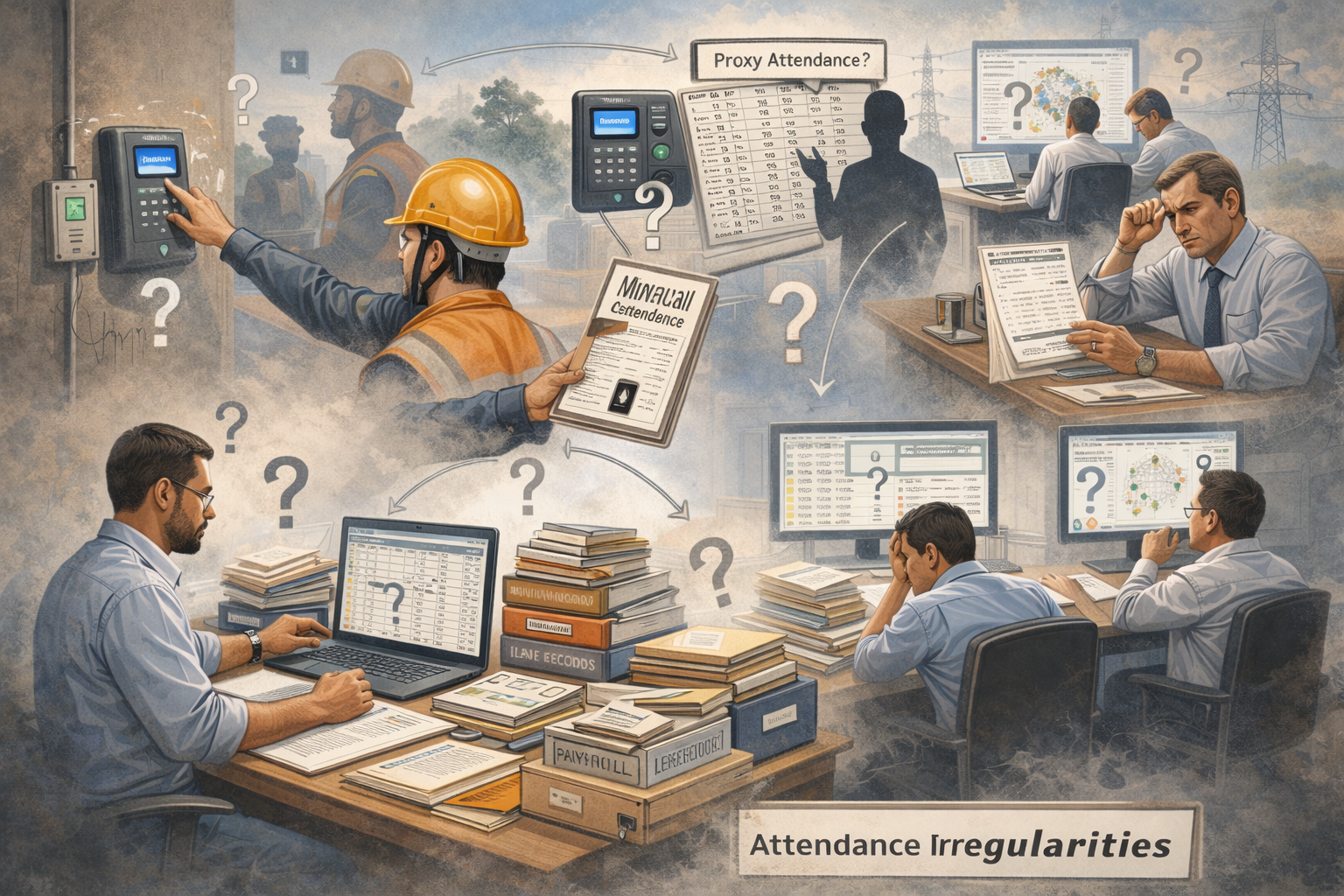
Attendance management emerged as one of the most critical governance challenges. Local biometric devices and manual attendance registers operated in isolation, with no centralized mechanism to consolidate or verify data in real time. This allowed delays in reporting and, in some cases, created scope for proxy attendance or manipulation, particularly at remote and field locations. The lack of centralized attendance visibility weakened accountability and made it difficult for management to assess actual workforce presence, productivity, and deployment efficiency. Since attendance data was not directly integrated with leave and payroll systems, discrepancies often went unnoticed until salary processing or audits, leading to corrective actions, employee grievances, and compliance concerns.
Inefficiencies in Leave, Payroll and Transfer Administration
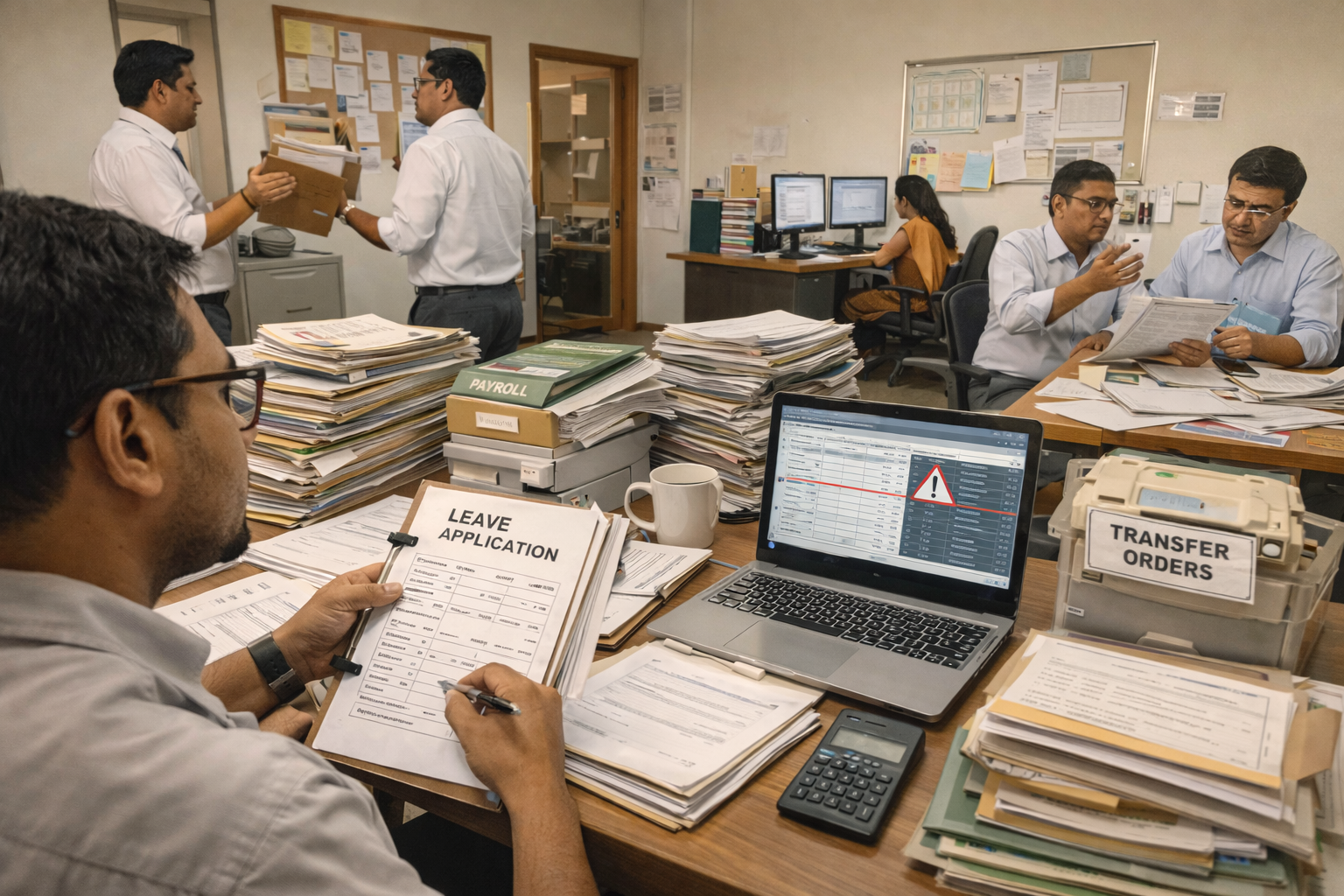
Manual and disconnected HR systems resulted in frequent inefficiencies in leave approvals, payroll processing, and transfer execution. Leave applications moved through physical files and informal communication channels, often leading to delays and lack of transparency for employees. Payroll calculations depended on manually consolidated attendance data, increasing the risk of errors, corrections, and delayed salary processing. Similarly, transfer and tour management lacked standardized digital workflows. Employees had limited visibility into the status of their transfer requests or orders, while administrators relied on paper files and emails for coordination. These inefficiencies not only affected operational planning but also impacted employee morale, trust, and satisfaction with administrative processes.
Need for a Transparent, Policy-Aligned and Technology-Driven HR Governance Framework
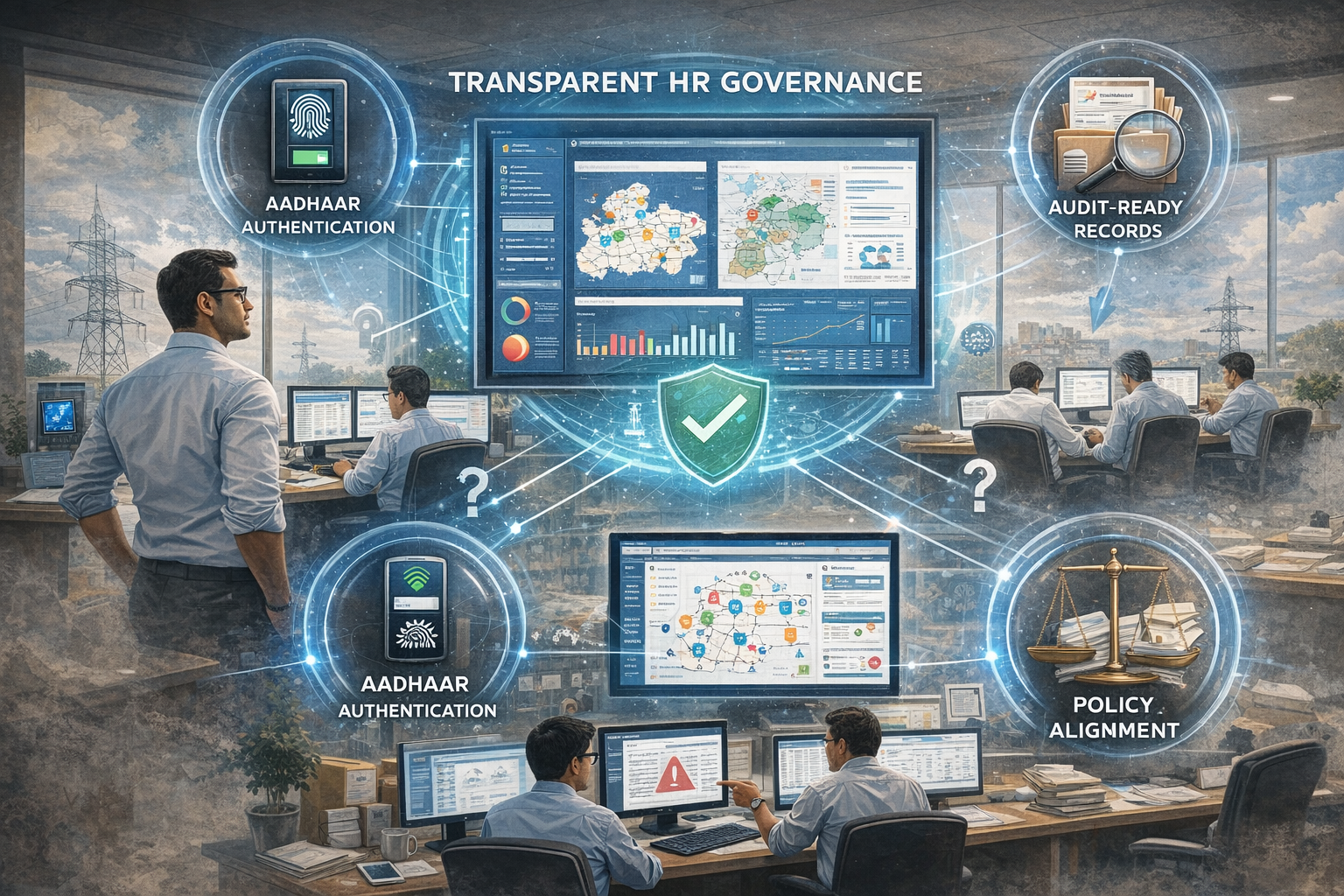
As the organization expanded in scale and complexity, it became evident that incremental improvements would not resolve systemic HR challenges. MPMKVVCL required a comprehensive, centralized, and policy-aligned digital HR governance framework capable of enforcing standard rules, reducing manual intervention, and ensuring accountability across all levels of the organization. The need was not limited to automation but extended to institutional reform—introducing Aadhaar-based authentication, rule-driven workflows, audit-ready digital records, and real-time dashboards for leadership. This realization laid the foundation for the conception of PRAYAS, envisioned as a transformational platform to modernize HR governance, improve workforce discipline, and enable data-driven decision-making across the organization.

Conceptualization of Digital HR Governance

System Design and Policy Alignment

Phased Deployment and Execution

Stabilization and Institutional Adoption
Ideation: Conceptualizing Digital HR Governance
The ideation phase focused on identifying systemic gaps in existing HR management practices rather than addressing isolated operational issues. Detailed consultations were held with senior management, HR officials, and field units to assess attendance practices, service record maintenance, payroll workflows, and approval hierarchies. These discussions highlighted that fragmented systems, manual intervention, and lack of real-time visibility were undermining accountability, efficiency, and employee trust.
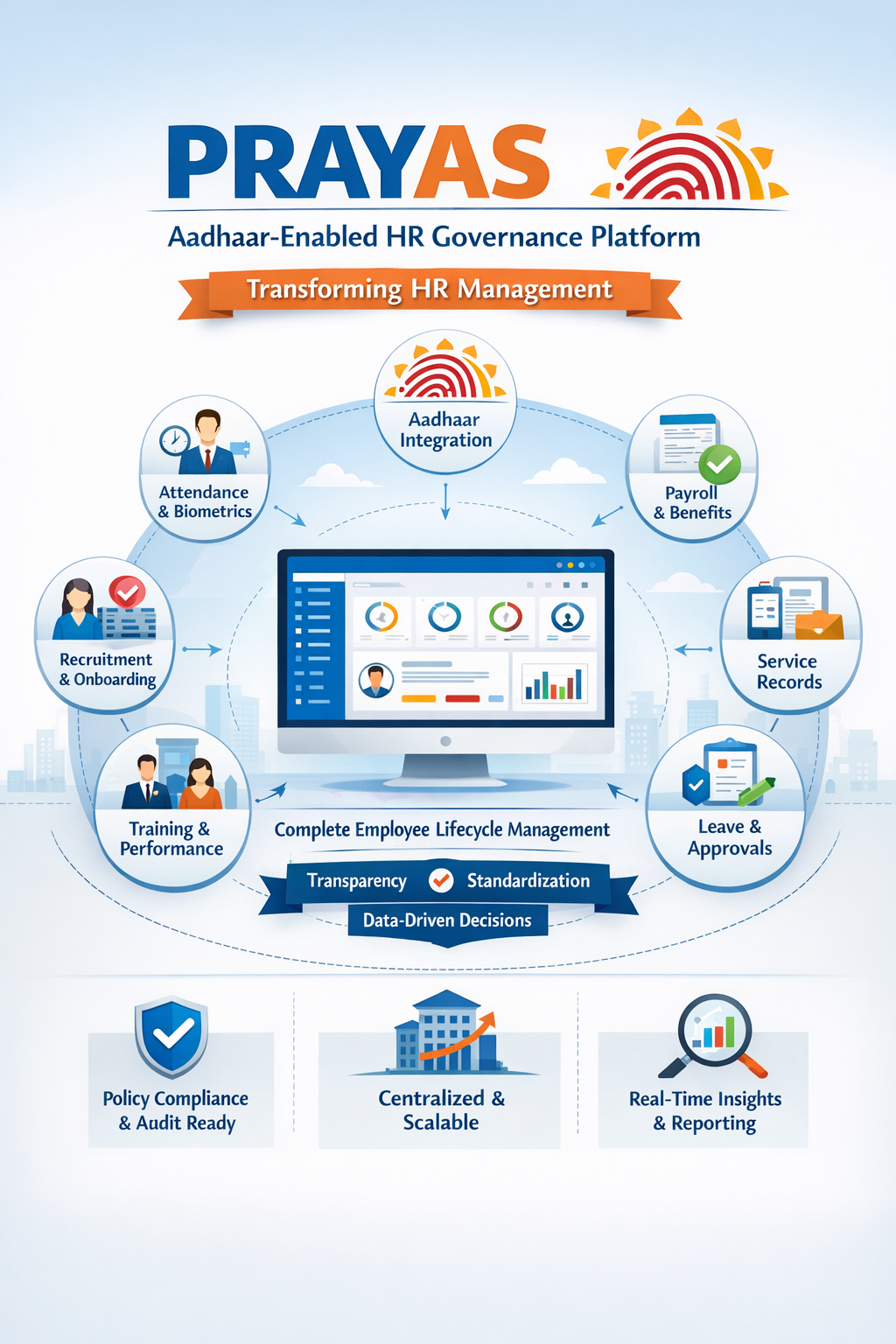
Based on these insights, PRAYAS was conceptualized as a centralized, Aadhaar-enabled HR governance platform capable of managing the complete employee lifecycle. The vision emphasized transparency, standardization, and data-driven decision-making, with HR positioned as a strategic governance function rather than a purely administrative role. Strong emphasis was placed on ensuring that the platform would align with organizational policies, audit requirements, and future scalability needs.
Planning: Designing a Scalable and Policy-Aligned HRMS
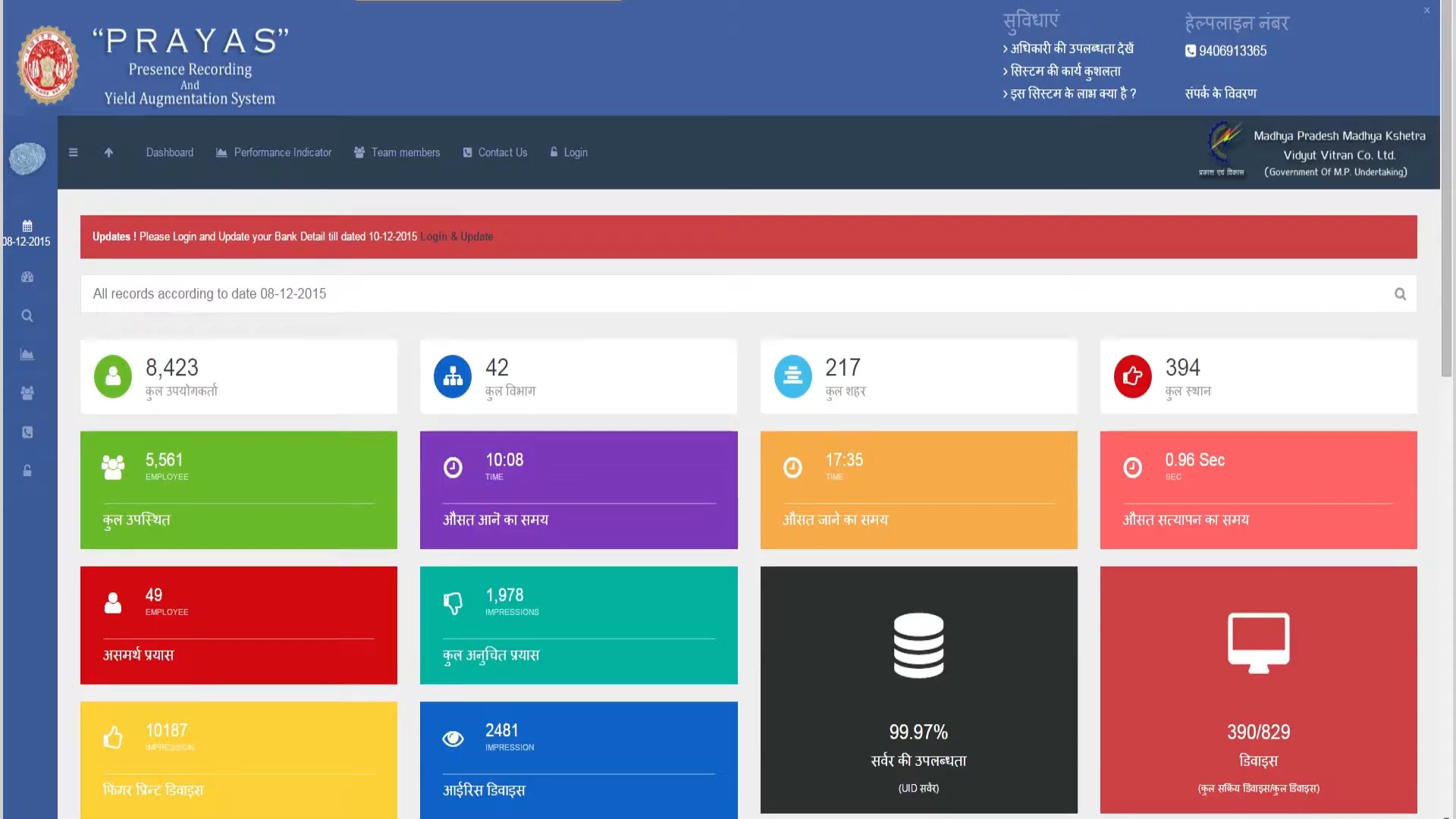
During the planning phase, the conceptual vision was translated into a detailed system architecture and implementation roadmap. All HR processes—attendance, leave, payroll, transfers, tours, and service books—were mapped end-to-end to define digital workflows, approval hierarchies, and rule engines. Data standards and validation protocols were finalized to ensure accuracy, consistency, and compliance.
Special attention was given to designing a system capable of supporting more than 25,000 employees across geographically dispersed locations. Aadhaar-based authentication, role-based access control, audit trails, and integration points with payroll systems were planned to ensure security and governance integrity. A phased rollout strategy was adopted to manage operational complexity and ensure smooth transition from legacy systems.
Execution: Phased Rollout and System Deployment
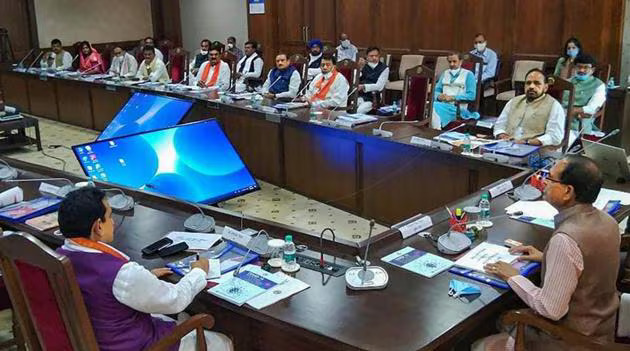
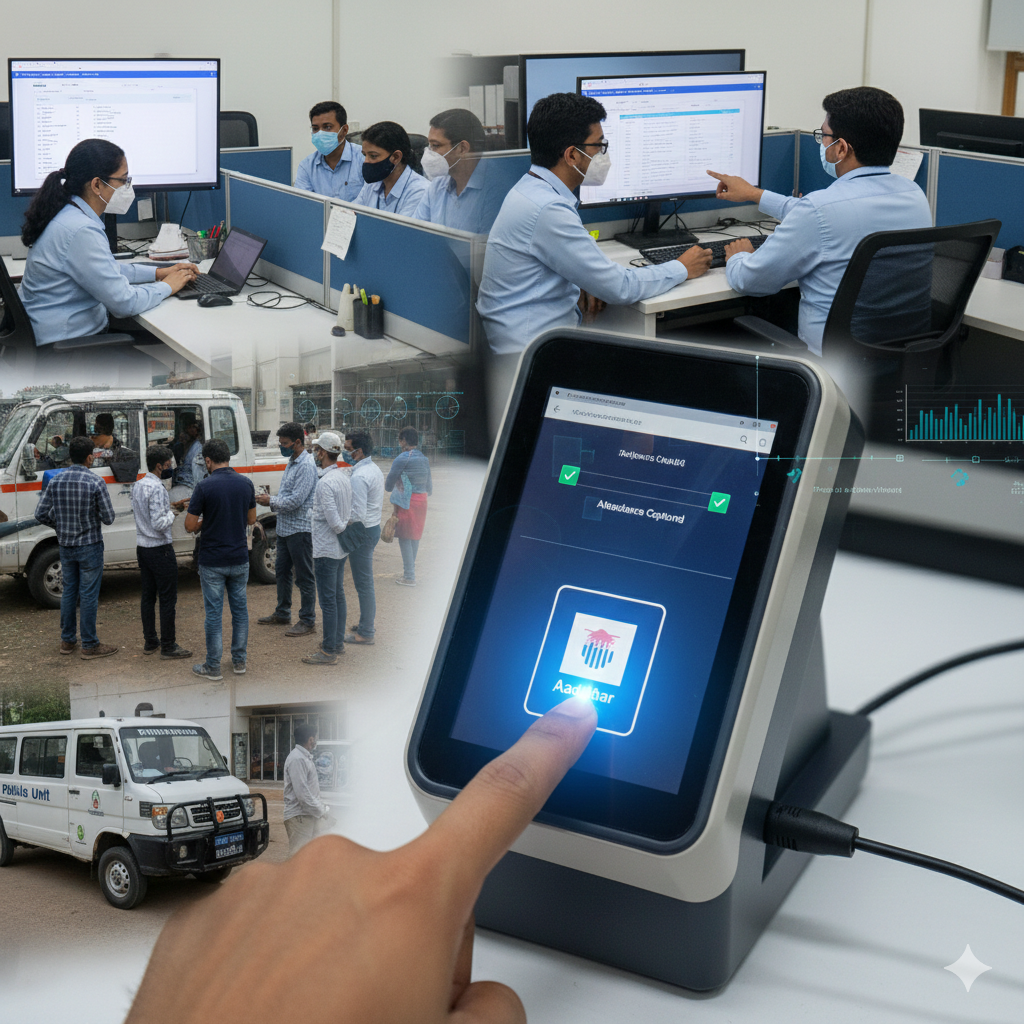
The execution phase involved phased deployment of PRAYAS across offices, circles, divisions, and field locations. Biometric attendance devices were integrated with Aadhaar authentication and centralized servers to enable real-time attendance capture. Legacy employee records and service books were digitized and validated, creating complete digital employee profiles.
raining and handholding sessions were conducted for HR staff and users to ensure smooth adoption. Despite challenges posed by the Covid-19 pandemic, execution was sustained through adaptive strategies, including remote coordination, digital reviews, and deployment of self-sufficient mobile operational units where required. Continuous monitoring ensured data quality, system stability, and adherence to timelines.
Stabilization and Institutional Adoption
Following deployment, the focus shifted to stabilization and institutionalization of PRAYAS within routine HR operations. Standard operating procedures were established for data updates, approvals, and exception handling. The platform was positioned as the single source of truth for all HR-related information, significantly reducing dependence on manual records and parallel systems.
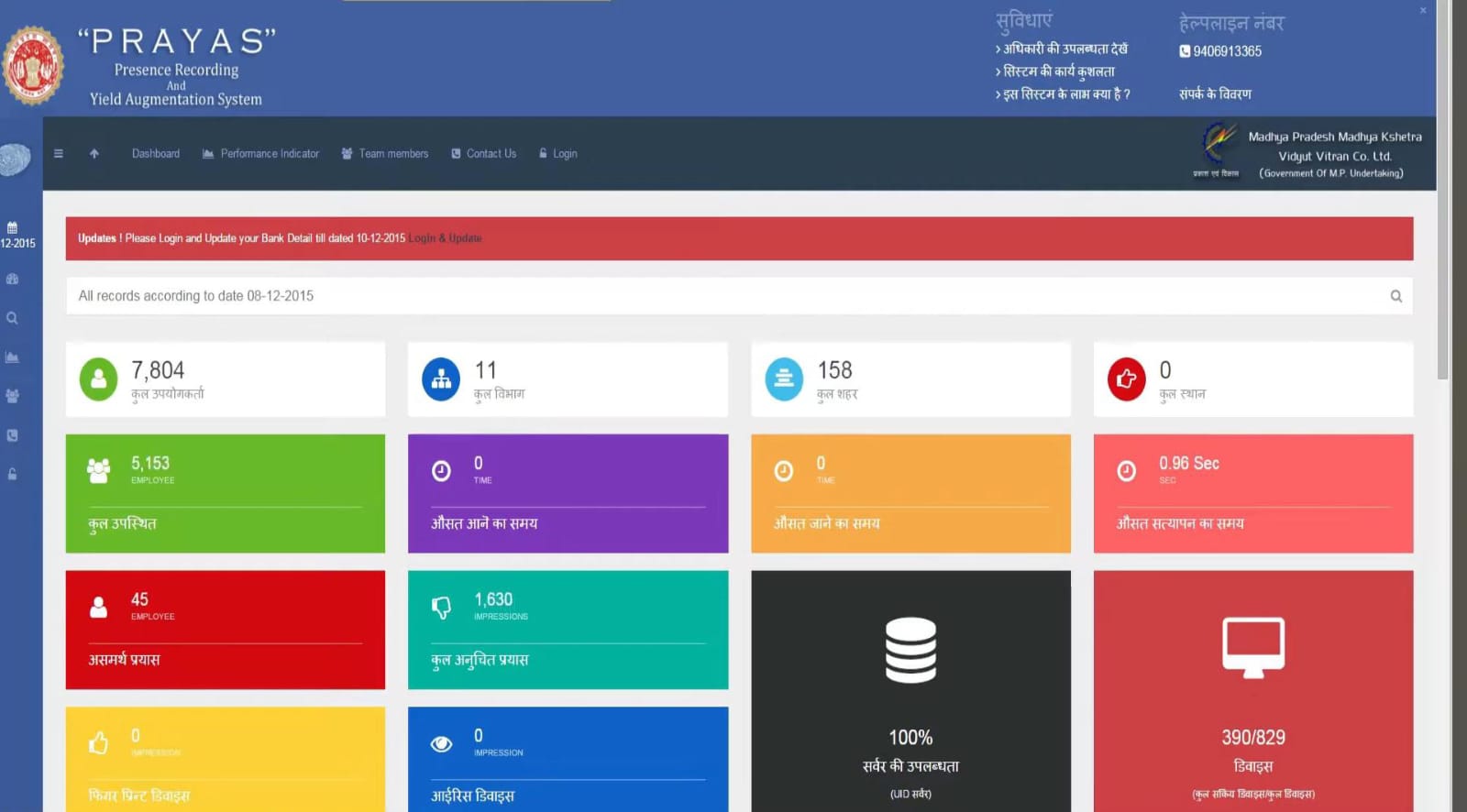
Over time, PRAYAS evolved into a trusted governance tool supporting transparency, accountability, and operational efficiency. Real-time dashboards enabled leadership to monitor workforce trends, while employees benefitted from improved access and predictability. This structured ideation-to-implementation approach ensured that PRAYAS delivered sustainable, long-term value as a digitally mature HR governance platform.
Institutionalization of Transparency and Workforce Accountability
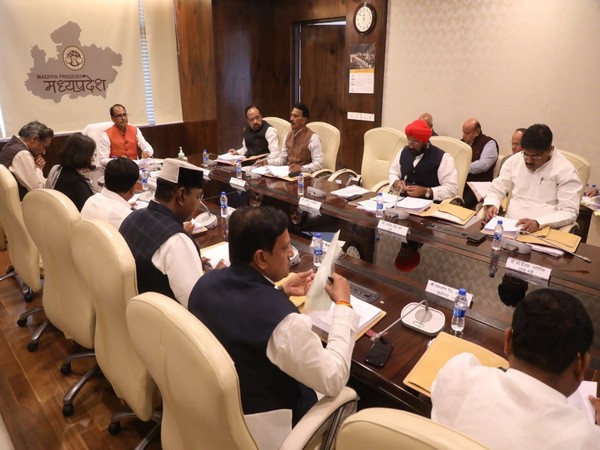
The implementation of PRAYAS has fundamentally transformed workforce governance by institutionalizing transparency and accountability across the entire employee base of Madhya Pradesh Madhya Kshetra Vidyut Vitaran Company Limited (MPMKVVCL). Aadhaar-enabled biometric attendance, coupled with centralized employee records, has eliminated long-standing ambiguities related to employee presence and attendance reporting. This reform has significantly reduced the scope for proxy attendance, delayed reporting, and manual manipulation, particularly in remote and field-based operational units. Centralized, real-time visibility into attendance and deployment has empowered supervisory and senior management to exercise effective oversight across regions. Attendance trends, absenteeism patterns, and workforce availability can now be monitored continuously, enabling timely corrective measures and better operational discipline. Accountability has thus shifted from being person-dependent to system-driven, strengthening governance credibility and organizational control.
Significant Gains in Administrative Efficiency and Process Standardization
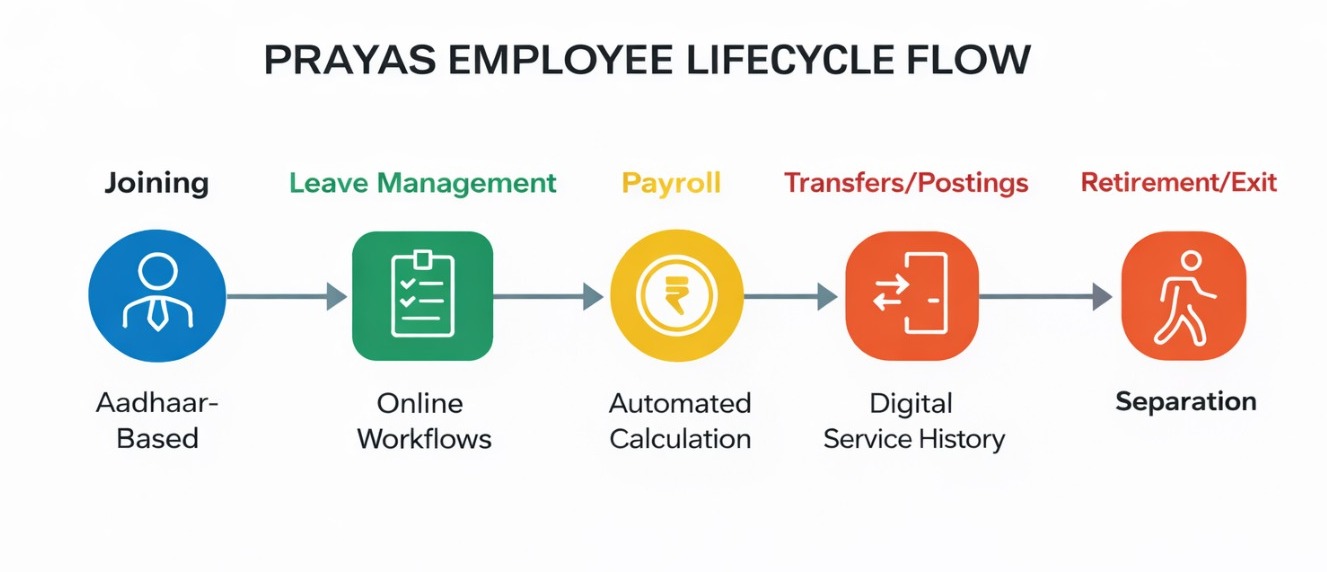
Significant Gains in Administrative Efficiency and Process Standardization PRAYAS has replaced fragmented, paper-based HR administration with a fully integrated, standardized digital workflow covering attendance, leave, payroll, transfers, and service book management. Processes that earlier required physical files, multiple approvals, and repeated data verification are now handled through structured, rule-driven workflows. This has substantially reduced administrative complexity and dependency on manual coordination across offices. As a result, approval timelines for leave, tour, and transfer requests have reduced significantly, while payroll processing has become more accurate and predictable due to direct integration with attendance and leave data. HR personnel are no longer burdened with routine reconciliation tasks and can focus on monitoring, compliance, and strategic workforce planning. Overall, the reform has delivered measurable efficiency gains and improved the reliability of HR operations at scale.
Improved Employee Experience, Trust, and Organizational Confidence
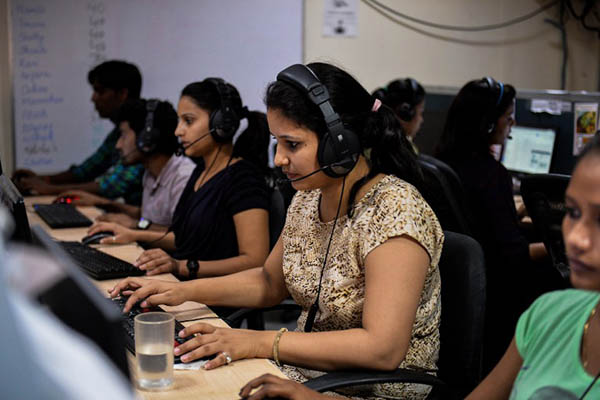
PRAYAS has markedly improved the employee experience by introducing transparency, accessibility, and predictability into HR interactions. Through the Employee Self-Service (ESS) portal and mobile access, employees can independently view attendance records, leave balances, payslips, service history, and transfer status. This direct access has reduced dependency on HR offices and minimized routine queries and follow-ups. Clear digital workflows, defined approval hierarchies, and real-time status tracking have reduced uncertainty and frustration among employees. Employees now have greater confidence that HR decisions are rule-based and timely, leading to fewer grievances and disputes. Over time, this enhanced trust has contributed to improved morale, better engagement, and a more professional employer–employee relationship within the organization.
Data-Driven Decision-Making and Long-Term Governance Transformation
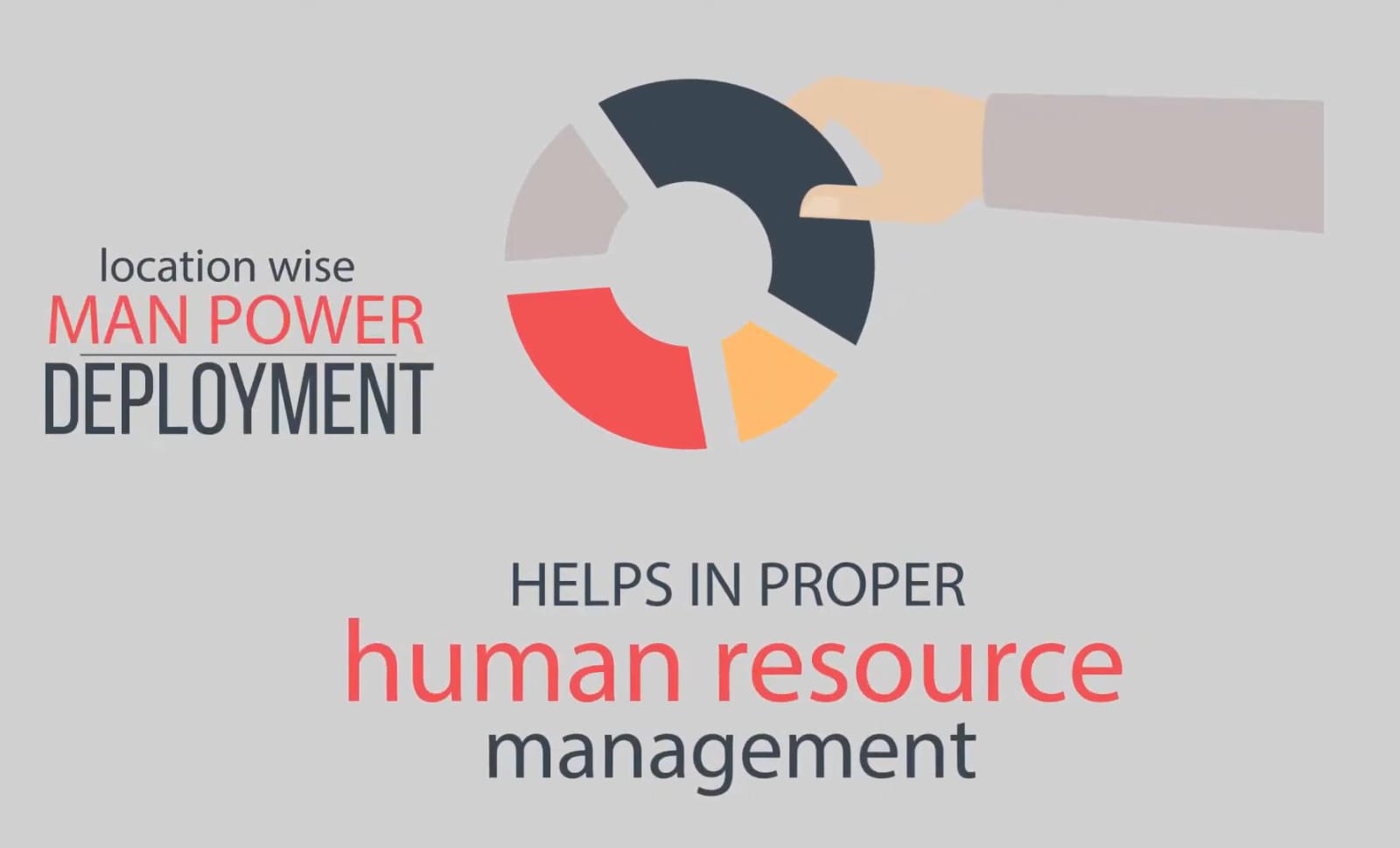
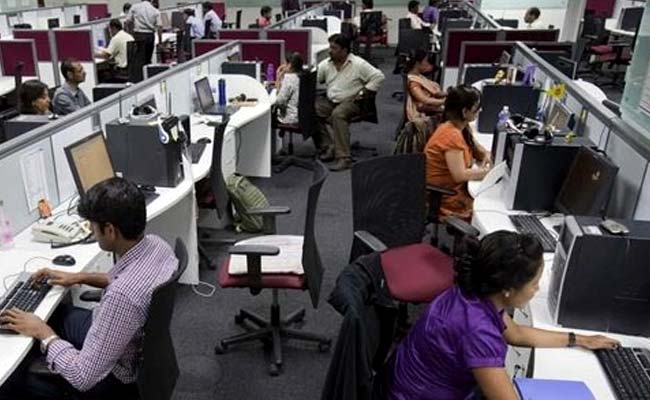
The availability of centralized dashboards and analytical reports under PRAYAS has enabled leadership to transition from reactive HR management to data-driven decision-making. Management can now analyze attendance trends, manpower distribution, workload patterns, and HR performance indicators across regions and operational units. These insights support informed decisions on workforce deployment, capacity planning, and operational optimization. Beyond immediate operational benefits, PRAYAS has laid the foundation for long-term digital governance maturity within MPMKVVCL. Standardized digital records, audit trails, and role-based access controls have strengthened compliance readiness and reduced reliance on legacy systems. The platform’s scalable architecture ensures that HR governance remains adaptable to future organizational growth, policy changes, and technological advancements, positioning PRAYAS as a sustainable and future-ready reform.