To Break the Cycle of Gender Discrimination Rooted in Society
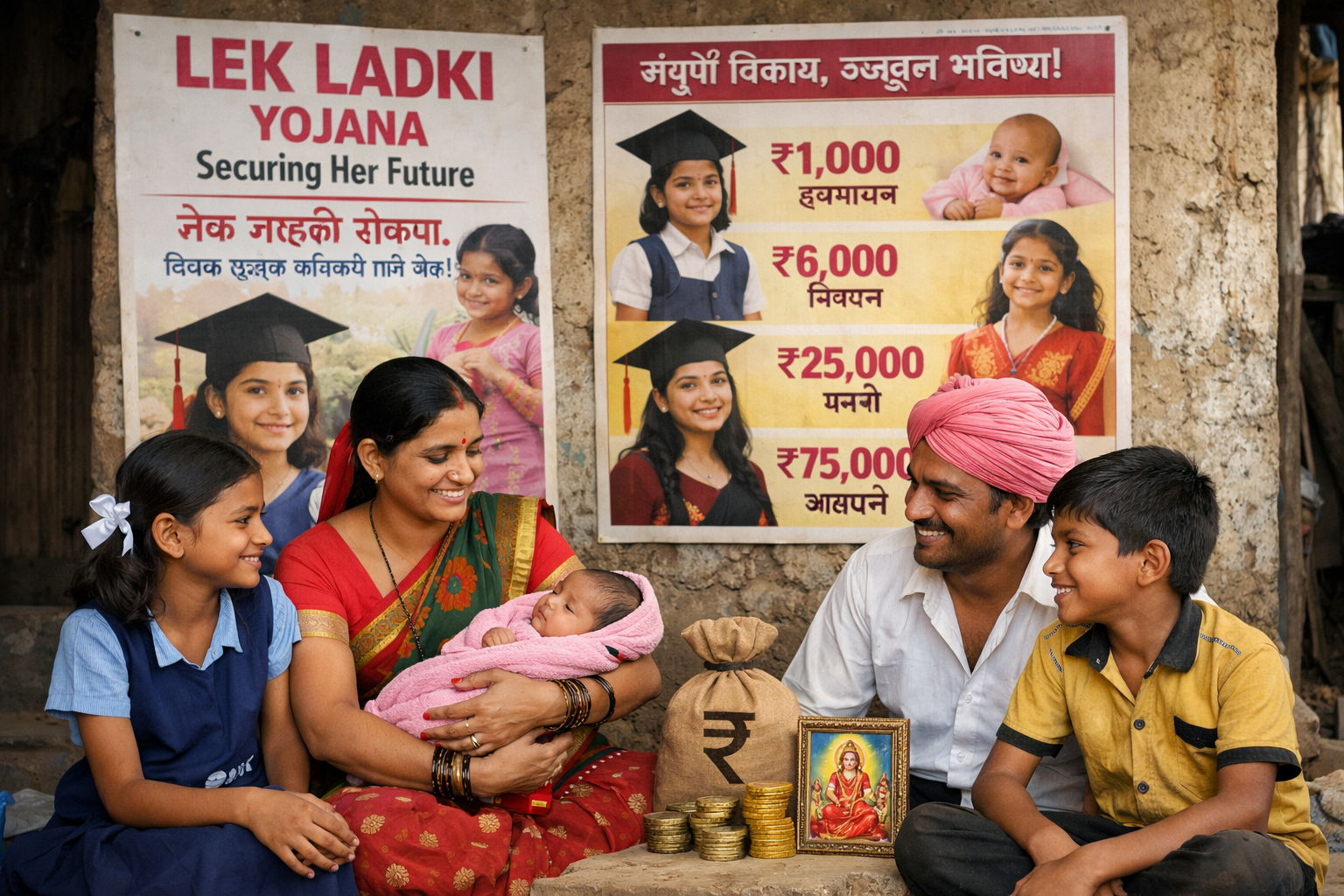
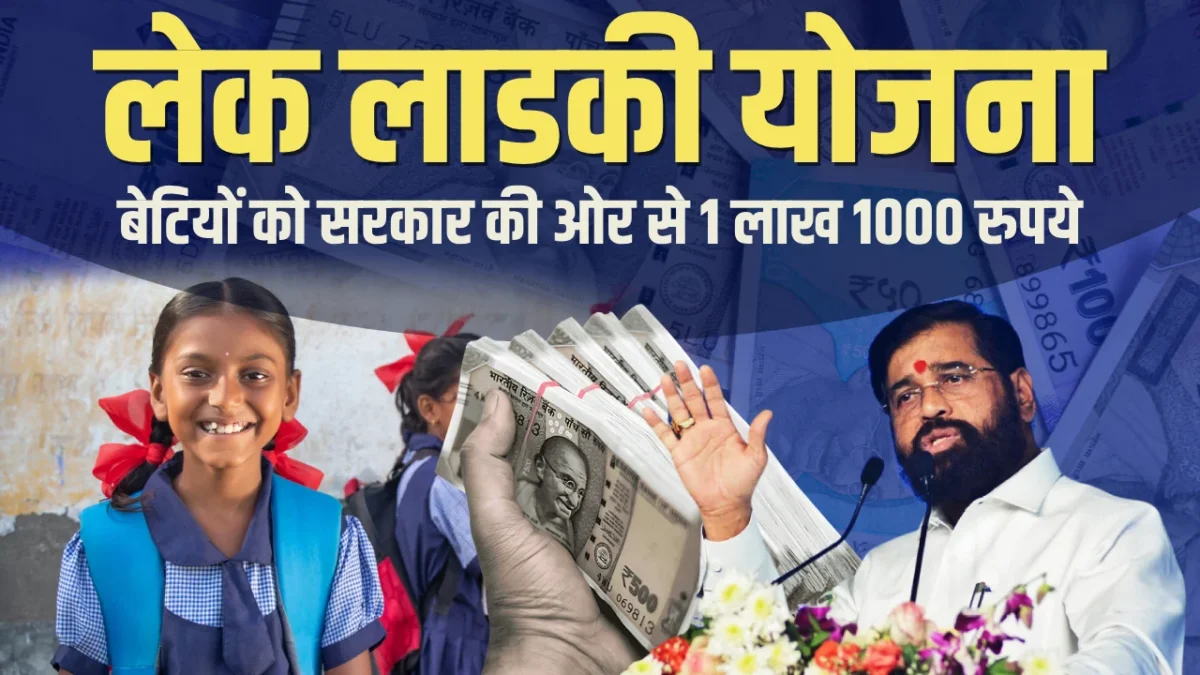
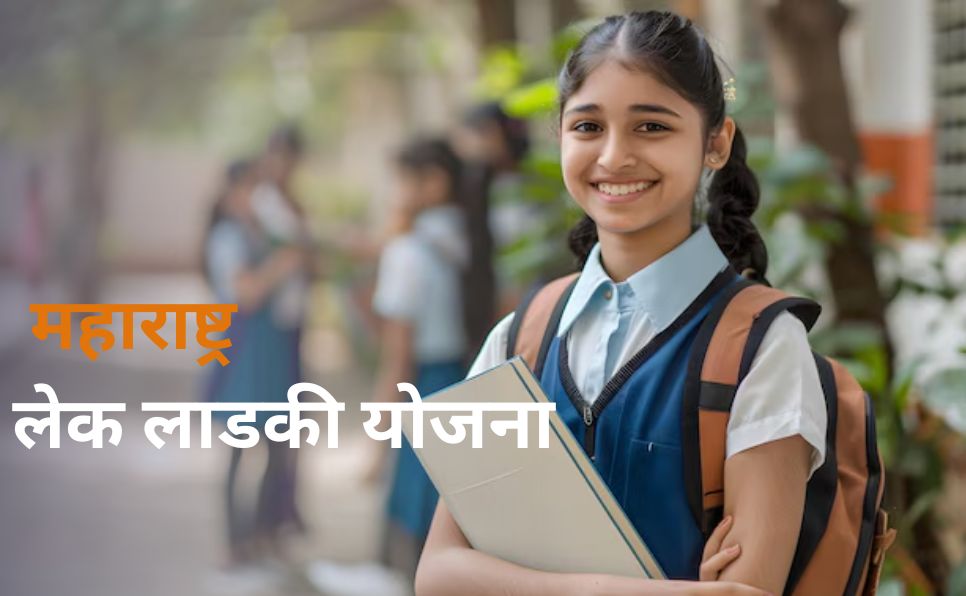
For generations, the birth of a girl in many parts of Maharashtra has been overshadowed by cultural bias, financial concern, and social pressure. Girls were often seen as a responsibility rather than a resource, leading to fewer investments in their nutrition, education, and future. The Lek Ladki Scheme was launched to fundamentally challenge and reverse this mindset by attaching financial value and state-backed support to every key stage of a girl’s development. By offering structured, assured monetary assistance from birth to adulthood, the government signaled that the girl child is equally deserving of care, dignity, and opportunity. This systematic financial encouragement helps reduce discrimination, boosts family acceptance, and acts as a corrective measure against long-standing gender inequities.
To Guarantee Health, Education, and Proper Development Through Milestone-Linked Support
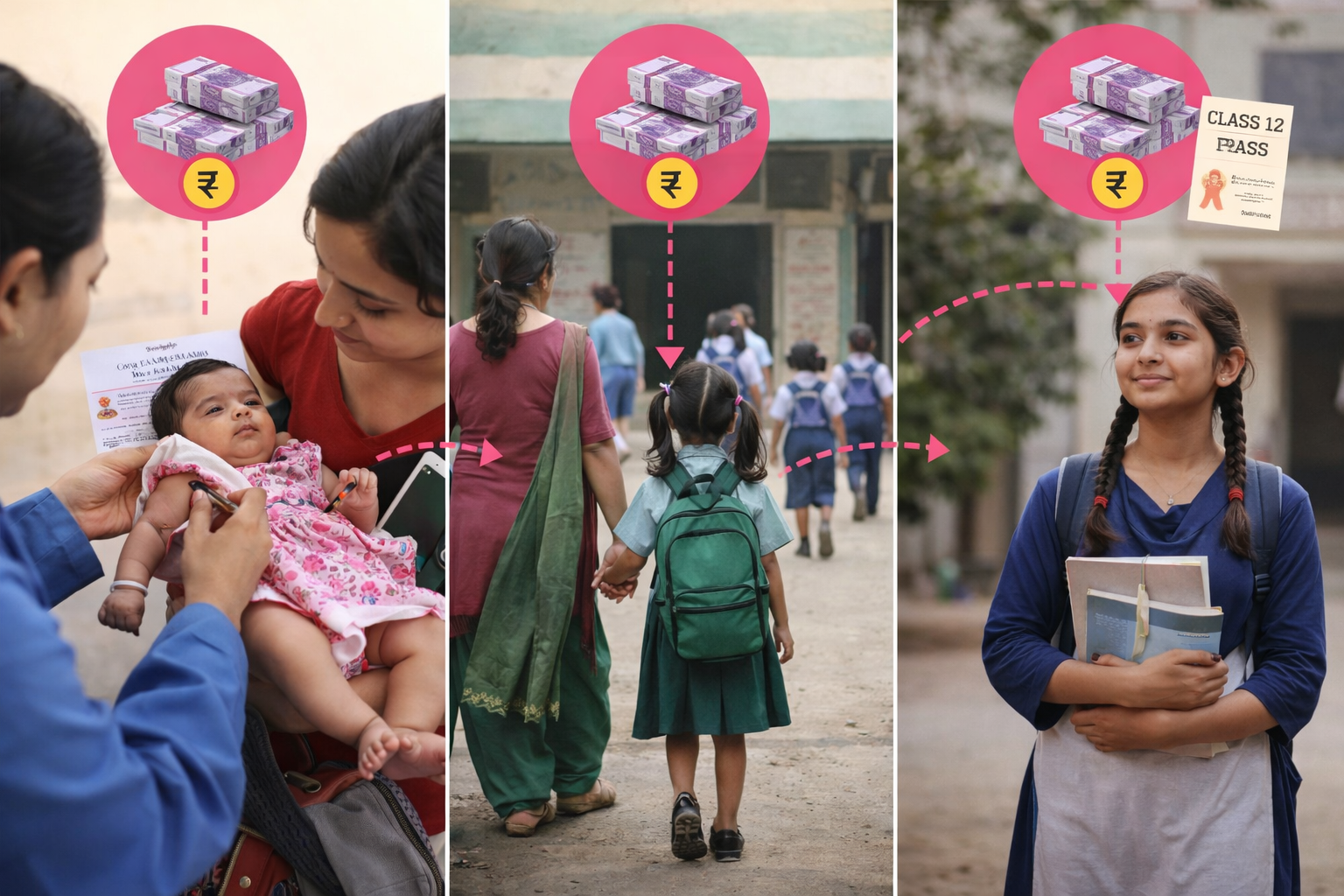
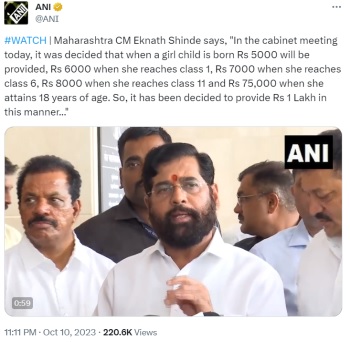
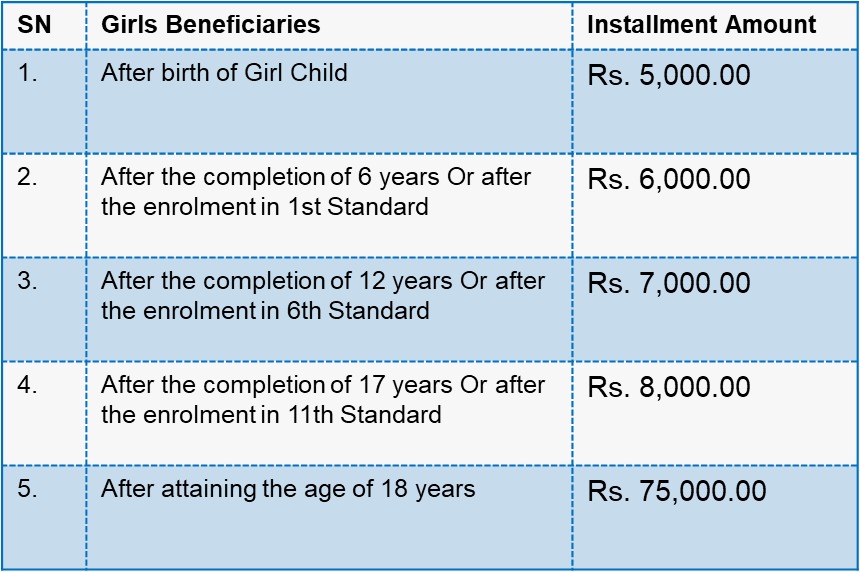
Girls frequently lag behind in immunization, early childhood health, and school enrollment due to family neglect or financial limitations. The scheme ties financial benefits to critical developmental milestones such as birth registration, vaccination completion, school admission, and continued education. This milestone-driven approach ensures that families prioritize essential interventions at the right time. By rewarding timely immunization, early schooling, and the completion of Class 12, the scheme improves the overall life trajectory of the girl child. It ensures she grows with better health, stronger educational continuity, and enhanced cognitive development—factors that directly influence her long-term social and economic standing.
To Prevent Early Marriage and Strengthen Long-Term Financial Security for Girls
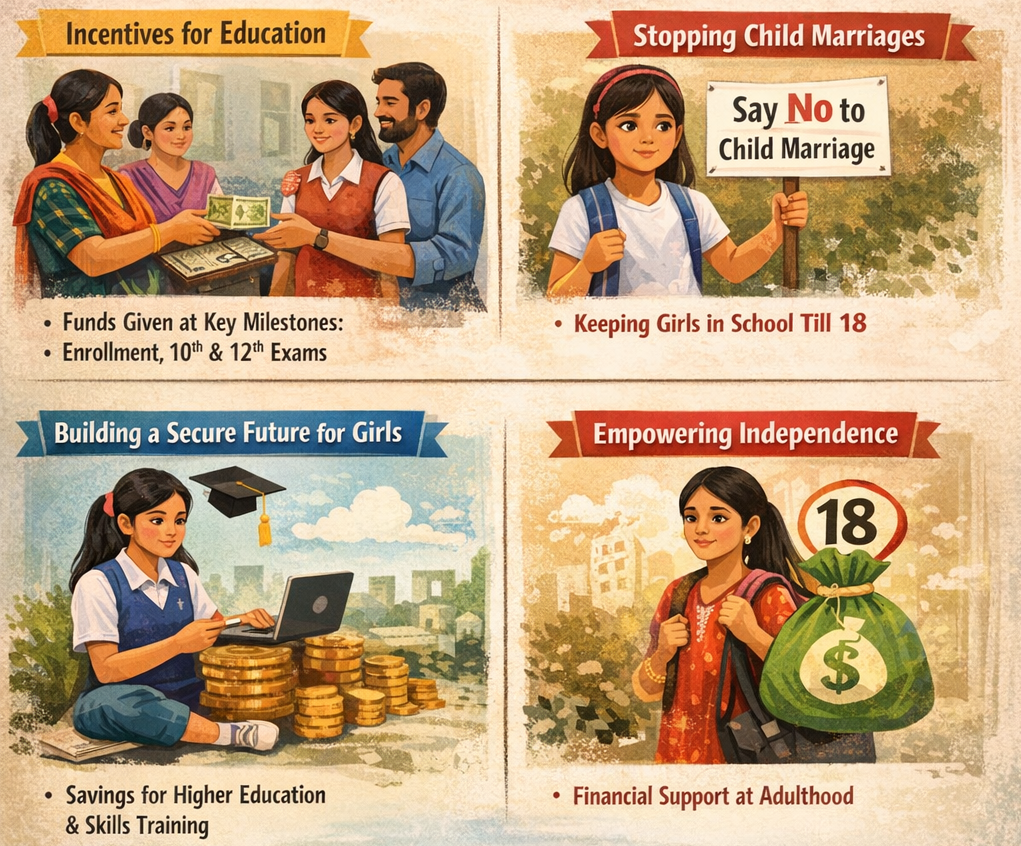
Early and forced marriages, driven by poverty and social customs, remain a major issue affecting girls’ safety, education, and agency. The Lek Ladki Scheme combats this by providing a financial pipeline extending up to age 18, ensuring that parents have a strong incentive to delay marriage and keep their daughters in school. By receiving instalments linked to academic progress and final schooling milestones, families are encouraged to prioritize education rather than early marriage. Additionally, the accumulated financial support gives girls greater security and independence as they step into adulthood. This not only protects them during vulnerable years but also equips them to pursue higher studies or skill-building opportunities.
To Build an Empowered, Gender-Equal Society Through Systemic Policy Intervention
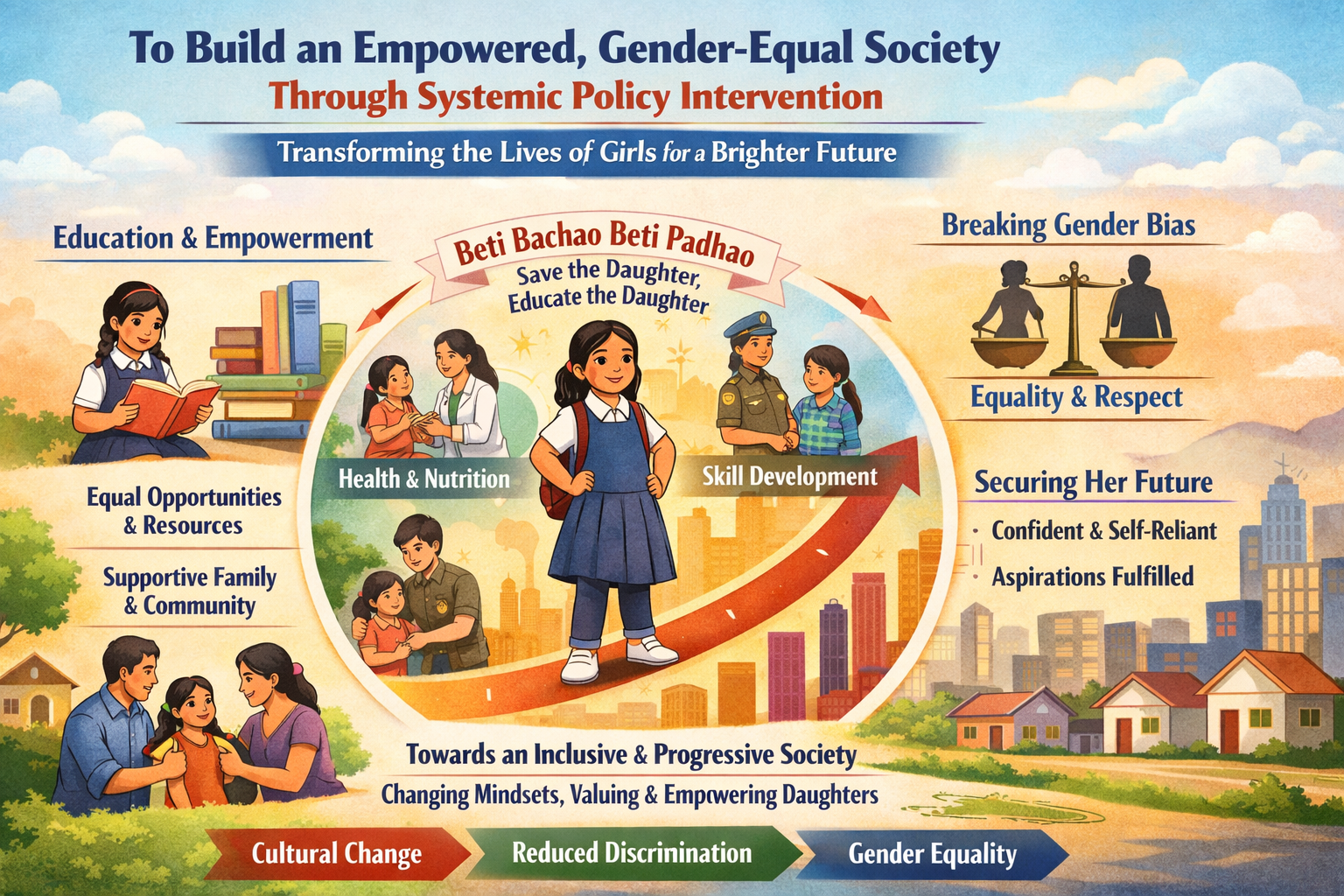
The scheme is more than a financial incentive—it is a long-term social reform strategy aimed at transforming the status of girls in society. By integrating support throughout a girl’s developmental years, the government strengthens her role within the family, community, and educational systems. This structured policy intervention promotes gender equality, reduces future vulnerabilities, and aligns with broader national initiatives such as Beti Bachao, Beti Padhao. Ultimately, the scheme contributes to a more inclusive society where girls receive equal access to opportunities, resources, and respect. The long-term impact extends beyond individual beneficiaries, influencing cultural norms and encouraging communities to value, educate, and empower their daughters.
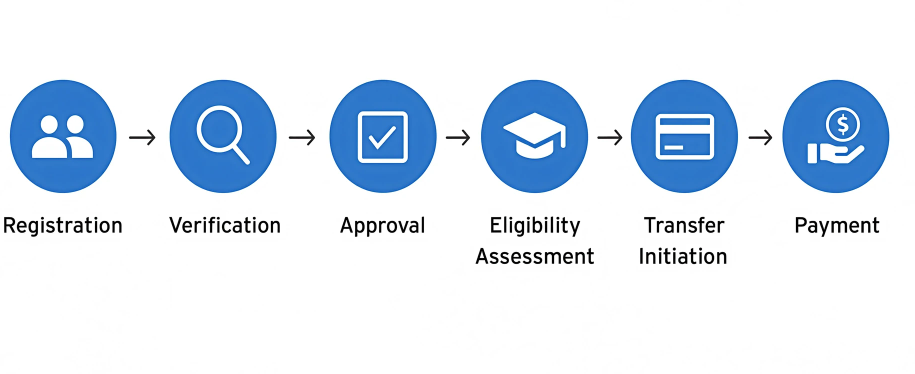

Building the Modern Vision System

Designing Digital Architecture

Executing Statewide System
Ideation: Building the Vision for a Modern, Transparent System
The ideation process started with an in-depth study of the existing manual workflow. Officials from ICDS, district administrations, Aanganwadi networks, and AWZPACT came together to analyse the root causes of delayed payments, duplicate registrations, and verification problems. It quickly became clear that the core issue was not the policy but the absence of a system-driven operational backbone. The team envisioned a future-ready solution that would digitally track a girl child’s entire journey—from birth registration to her final instalment at Class 12—without any manual intervention.
This vision required a platform that could integrate Aadhaar authentication, document verification, approval workflows, milestone calculation, payment file generation, reconciliation, and dashboard reporting into one seamless process. The emphasis was not only on automation but also on transparency. Parents needed real-time visibility of their child’s status, and officers needed a reliable, single source of truth to manage beneficiaries. Thus, the ideation phase laid the foundation for a robust digital ecosystem capable of handling lakhs of beneficiaries with speed, accuracy, and accountability.
Planning: Designing a Statewide Digital Architecture
Once the vision was established, the planning phase focused on transforming it into a scalable, field-ready design. The first step was to map the entire data flow—how information would move from Aanganwadi registration to CDPO approval, milestone eligibility checks, voucher generation, PFMS processing, and finally, DBT transfers. This ensured that every step was governed by clear rules and traceable actions. The planning team then standardized all master data: beneficiary attributes, instalment amounts, age calculation logic, district hierarchies, document types, and officer roles. This standardization ensured uniformity across all districts and eliminated confusion in the approval process.
In parallel, the technology architecture was drafted to support Aadhaar integration, secure login systems, role-based access, encrypted document storage, audit trails, milestone engines, and MIS dashboards. Data security was treated as a core requirement from day one. At the administrative level, a statewide rollout roadmap was developed, outlining how districts would be onboarded, how staff would be trained, and how the transition from manual processes to digital workflows would occur without disruption. This required coordination between ICDS headquarters, district collectors, CDPO offices, and thousands of Aanganwadi workers across the state.

Execution: Converting the Blueprint Into a Working Statewide System
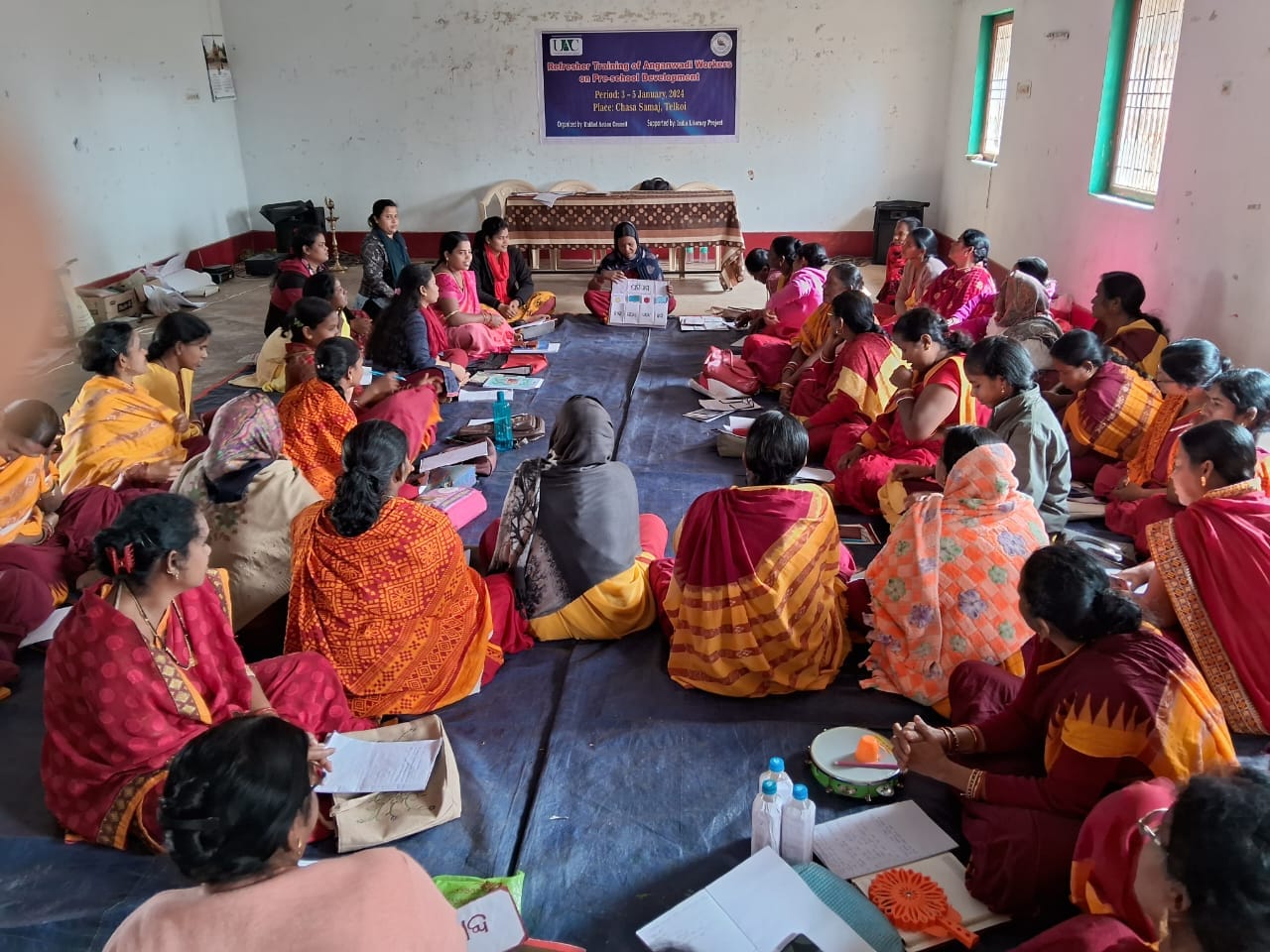
The execution phase was the most critical part of the transformation. The platform was first deployed as a pilot in selected districts to test document uploads, milestone calculations, PFMS file generation, SMS alerts, and approval workflows. These pilots revealed valuable insights, helping refine user interfaces, simplify verification steps, and improve system speed. Once the pilot stabilized, large-scale capacity-building sessions were initiated across all districts. Aanganwadi workers, supervisors, CDPOs, and district officers participated in on-ground workshops, hands-on training sessions, and video demonstration modules. This ensured that even users with minimal digital familiarity could easily operate the system.
After the training phase, a massive statewide beneficiary digitization campaign began. Aanganwadi workers registered beneficiaries online, uploaded mandatory documents, validated Aadhaar numbers, and completed the initial verification cycle. This created the first-ever centralized digital repository of all girl beneficiaries under the scheme. Once the data was stabilized, the system activated its milestone logic engine. The platform automatically calculated a child's age, identified the instalment due, initiated document checks, and generated vouchers without manual involvement. PFMS-compatible files were automatically created and uploaded for DBT transfers. Parents received instant SMS alerts at every stage—registration, approval, payment—ensuring complete transparency.
Improved Efficiency & Timely Disbursements
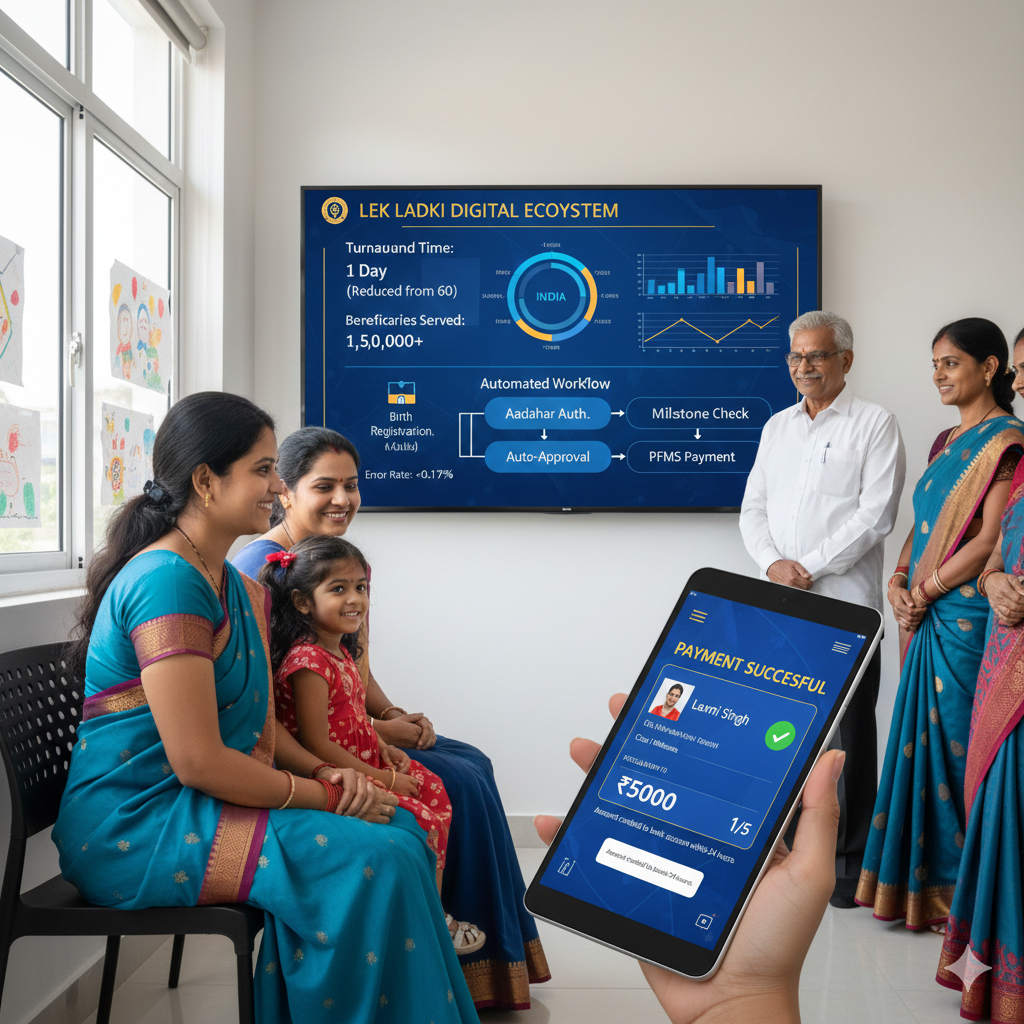
The digitization of the Lek Ladki Scheme has revolutionized how financial assistance reaches beneficiaries. Earlier, every instalment involved multiple layers of manual scrutiny—paper-based forms, physical verification, and repetitive approvals—causing long delays that often stretched into weeks or even months. With the introduction of the automated workflow, the system now performs critical calculations—such as age eligibility and milestone matching—instantly. Document verification is streamlined, approvals are faster, and payment files are generated automatically through the PFMS-integrated module. This has drastically reduced turnaround time. Parents now receive the instalment amount within a predictable, shortened cycle, eliminating their dependence on repeated visits to Aanganwadi centres. The efficiency gains not only ensure timely support for the girl child but also significantly reduce administrative workload across the ICDS ecosystem.
High Transparency, Traceability & Strong Accountability
One of the most transformative outcomes of the digital system is the level of transparency introduced at every stage of the beneficiary life cycle. Actions that were previously manual and undocumented are now captured digitally with officer credentials, timestamps, and workflow histories. This means every registration, approval, rejection, or modification can be traced back to a specific officer and a specific point in time. Such transparency has minimized the possibility of discrepancies, manipulation, or misuse of authority. Families too have gained clarity—they receive SMS alerts for registration confirmation, document approval, upcoming milestones, and successful DBT transfers. This direct communication reduces confusion and strengthens trust between beneficiaries and the government. The transparent workflow ensures that the scheme is no longer dependent on verbal assurances or physical tracking; instead, digital traceability has created a governance environment grounded in accountability and integrity.
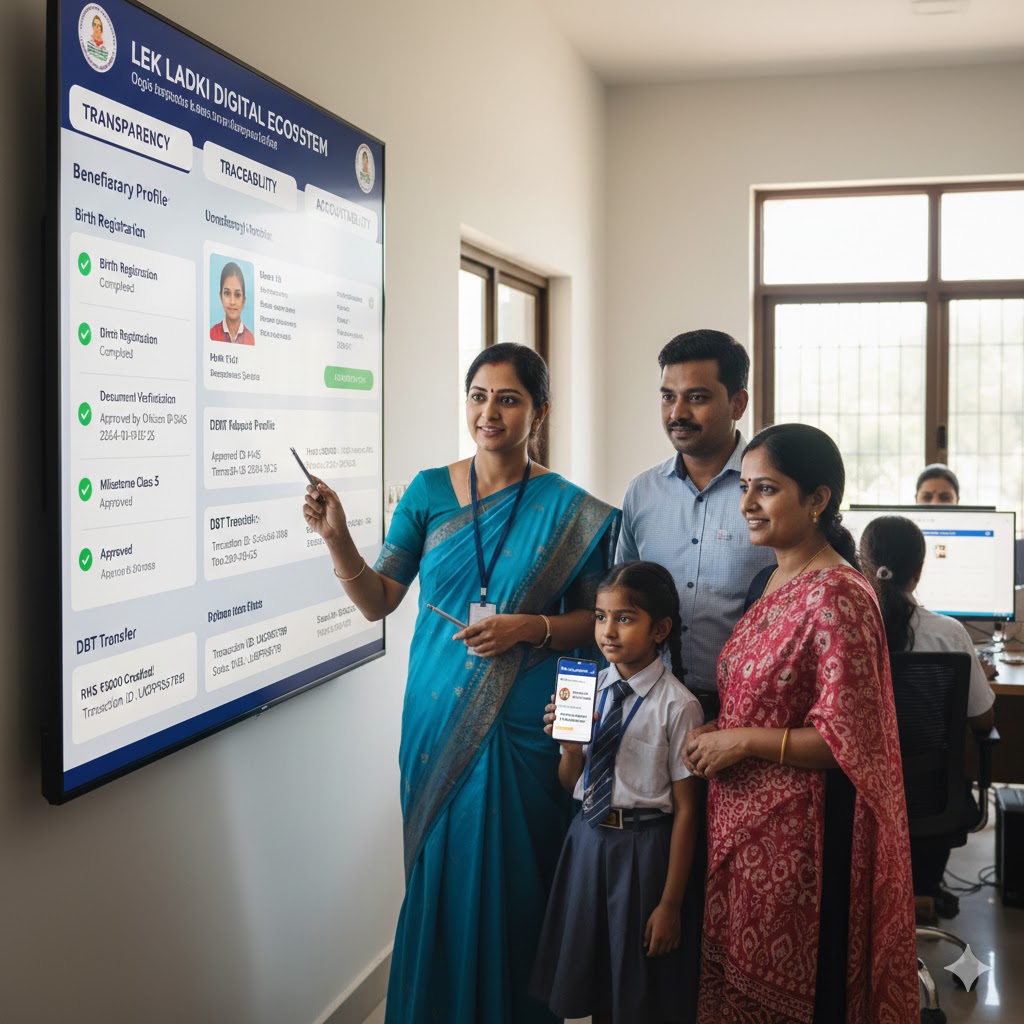
Removal of Duplicate Records & Prevention of Financial Leakage
Before digitization, the scheme faced major challenges due to duplicate entries, spelling mismatches, incorrect bank details, and ghost beneficiaries who did not actually exist but still appeared in manual registers. These issues led to misallocation of funds, payment failures, and unintentional leakages that were difficult to trace. With the Aadhaar-based validation engine and bank account verification system, duplicates are automatically detected and eliminated. Each girl child is now uniquely linked to a verified identity and an authenticated bank account. The reconciliation module further strengthens financial discipline by cross-checking every transaction with bank response files, ensuring that any mismatched, failed, or pending payment is immediately flagged for correction. As a result, the scheme has achieved a secure and leakage-free financial environment where only genuine, verified beneficiaries receive instalments—maximizing the impact of government funds and safeguarding public resources.

Data-Driven Governance, Real-Time Monitoring & Better Planning
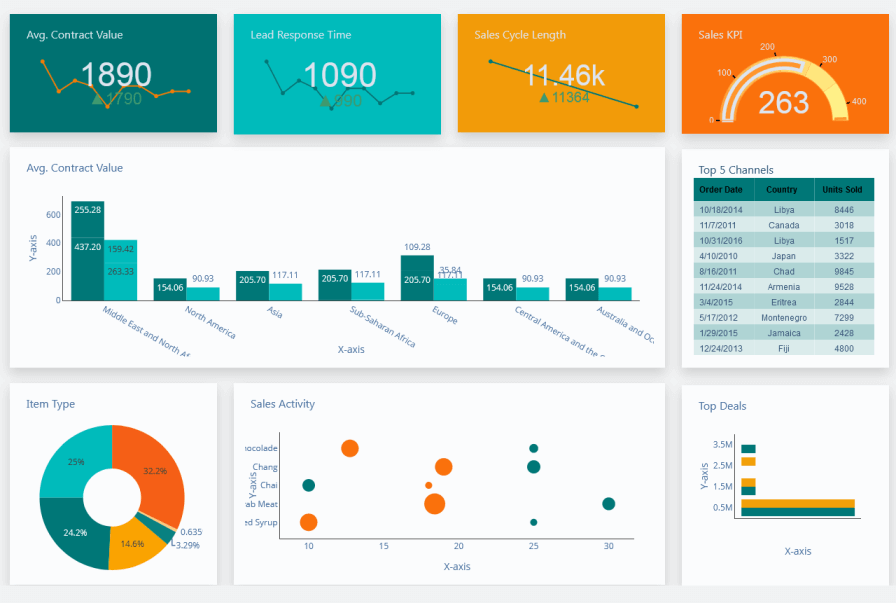
The introduction of real-time digital dashboards has fundamentally changed the way ICDS and district administrations monitor the scheme. Instead of relying on outdated registers or manual reports sent periodically from the field, officials now have instant access to district-wise and state-wide performance indicators. These dashboards display the number of beneficiaries registered, pending verifications, approved cases, rejected applications, and successful DBT payments. They also provide foresight into upcoming eligibility, allowing administrators to predict the number of children due for instalments in the coming months. This predictive capability enables better fund planning, ensuring timely allocation of resources to all districts. The ability to monitor bottlenecks in real time—such as delays in document approval or unusual rejection patterns—allows officers to intervene immediately and improve field-level performance. Overall, the scheme has evolved from a paper-driven workflow into a dynamic, data-driven governance system that empowers leadership with accurate information and actionable insights.