Fragmented and Decentralized Vendor Management Practices
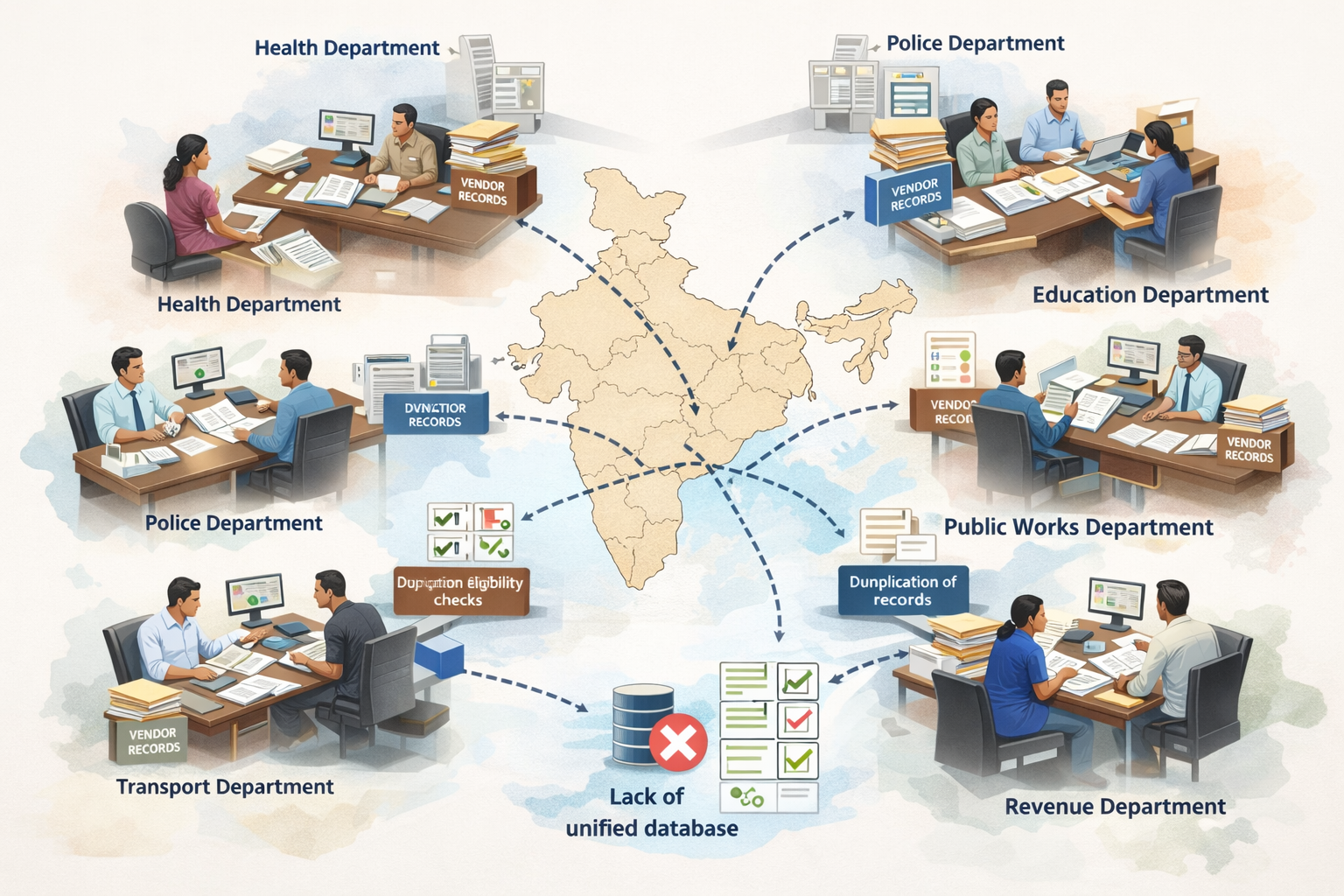
Prior to the introduction of ANUBANDH, vendor and contractor management across government departments was highly fragmented and decentralized. Each department followed its own processes for vendor registration, empanelment, and documentation, resulting in duplication of records, inconsistent eligibility checks, and absence of a unified vendor database. This lack of standardization made it difficult to assess vendor credibility, track historical performance, or ensure uniform compliance with statutory and administrative requirements. The repeated manual verification of the same vendor information increased administrative burden, slowed down procurement and execution processes, and exposed departments to operational and governance risks.
Manual and File-Based Contract and Work Order Management

Contract creation, approval, and work order issuance were traditionally handled through manual, file-based processes involving multiple levels of physical movement and approvals. This resulted in prolonged processing timelines, limited traceability, and dependency on individual offices and officials. Monitoring contract amendments, extensions, variations, and work progress was cumbersome, as records were scattered across files and registers. The absence of a centralized digital mechanism restricted real-time visibility into contract status and project execution, limiting the ability of departments to proactively manage timelines, costs, and deliverables.
Inefficient Invoice Processing and Delayed Payments

Invoice submission, verification, and payment disbursement were largely paper-driven and involved multiple manual checks across departments. This led to delays in invoice approvals, reconciliation challenges, and extended payment cycles, adversely affecting vendor confidence and cash flow. Vendors had limited transparency into invoice status, often requiring repeated follow-ups. From a financial governance perspective, manual handling of statutory deductions such as GST and TDS increased the risk of errors, while lack of integration with banking systems delayed payments and weakened financial control and reporting.
Limited Governance Oversight, Compliance, and Decision Support

The absence of an integrated digital platform significantly constrained governance oversight and compliance monitoring. Senior management lacked consolidated, real-time information on vendor performance, contract execution, financial exposure, and payment timelines across departments. Audit readiness depended heavily on manual record compilation, increasing compliance risks. With growing regulatory scrutiny and the need for stronger transparency and accountability, there was a clear requirement for a centralized, secure, and data-driven system. ANUBANDH was conceptualized in this context to institutionalize standardized workflows, enforce compliance, and enable informed, data-driven decision-making across the entire contract and vendor management ecosystem.

Ideation

Execution

Implementation
Ideation: Conceptualizing a Digital Governance Reform
The ideation of ANUBANDH emerged from a strategic realization that contract and vendor management is a core governance function with direct implications for public finance, service delivery, and institutional credibility. Existing systems were fragmented, heavily manual, and dependent on departmental silos, resulting in limited transparency, weak compliance enforcement, and delayed contractual outcomes. These challenges not only increased administrative burden but also exposed departments to financial, operational, and audit risks. There was a clear need to shift from process-driven file management to an outcome-oriented, digitally governed framework.
Accordingly, ANUBANDH was conceptualized as an institutional reform rather than a standalone IT solution. The ideation focused on creating a single, authoritative digital platform that could standardize vendor onboarding, contract execution, project monitoring, and payment processes. Key principles guiding the design included elimination of discretionary interventions, system-enforced compliance, end-to-end traceability, and real-time governance visibility. The objective was to embed transparency, accountability, and audit readiness into routine operations while improving efficiency for departments and predictability for vendors.
Building on this vision, the ideation also emphasized scalability and sustainability across departments and programmes. ANUBANDH was designed to function as a common governance backbone, adaptable to diverse contractual models, financial rules, and sectoral requirements without diluting standardization.

Execution: Translating Vision into an Integrated Platform
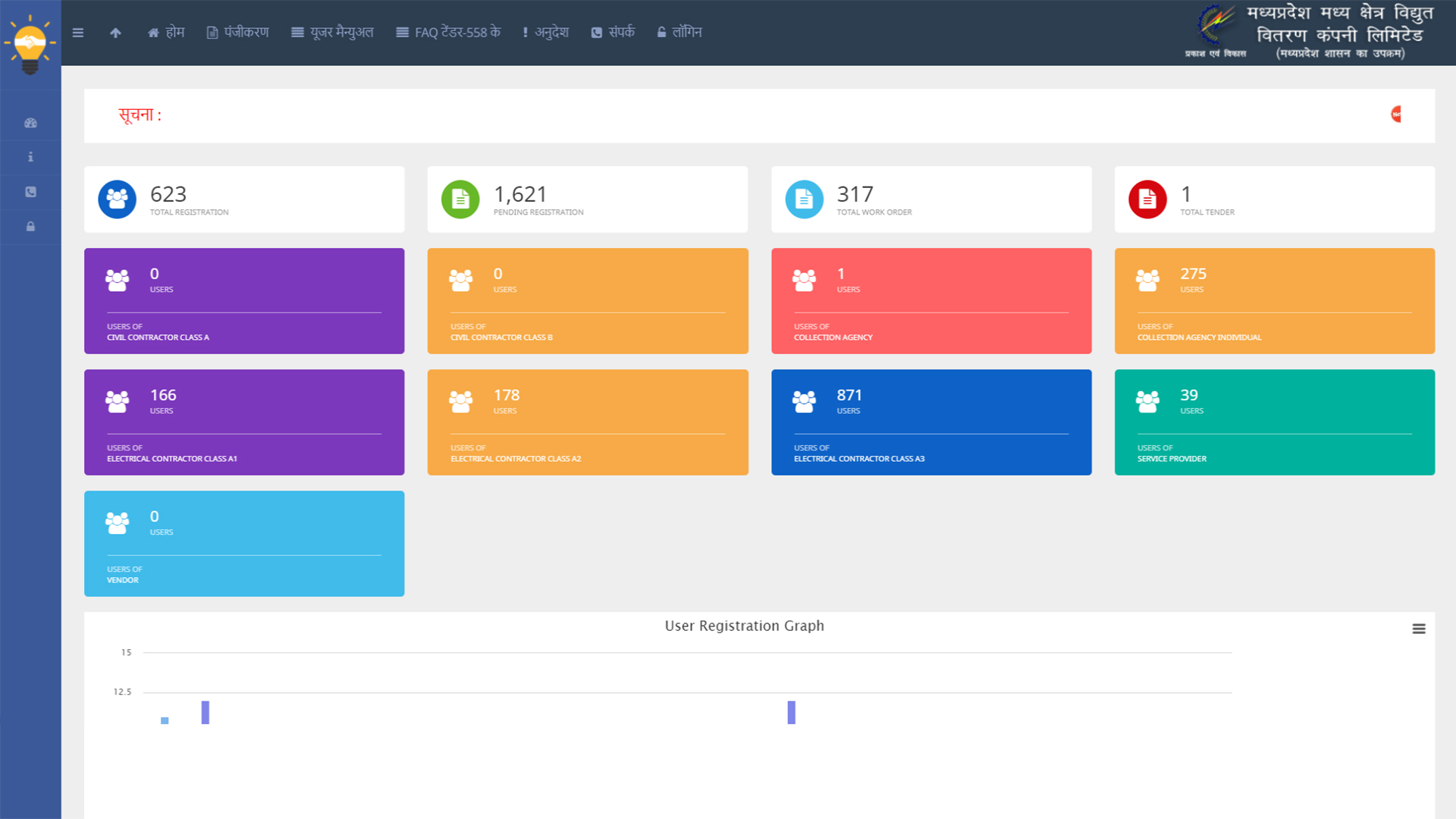
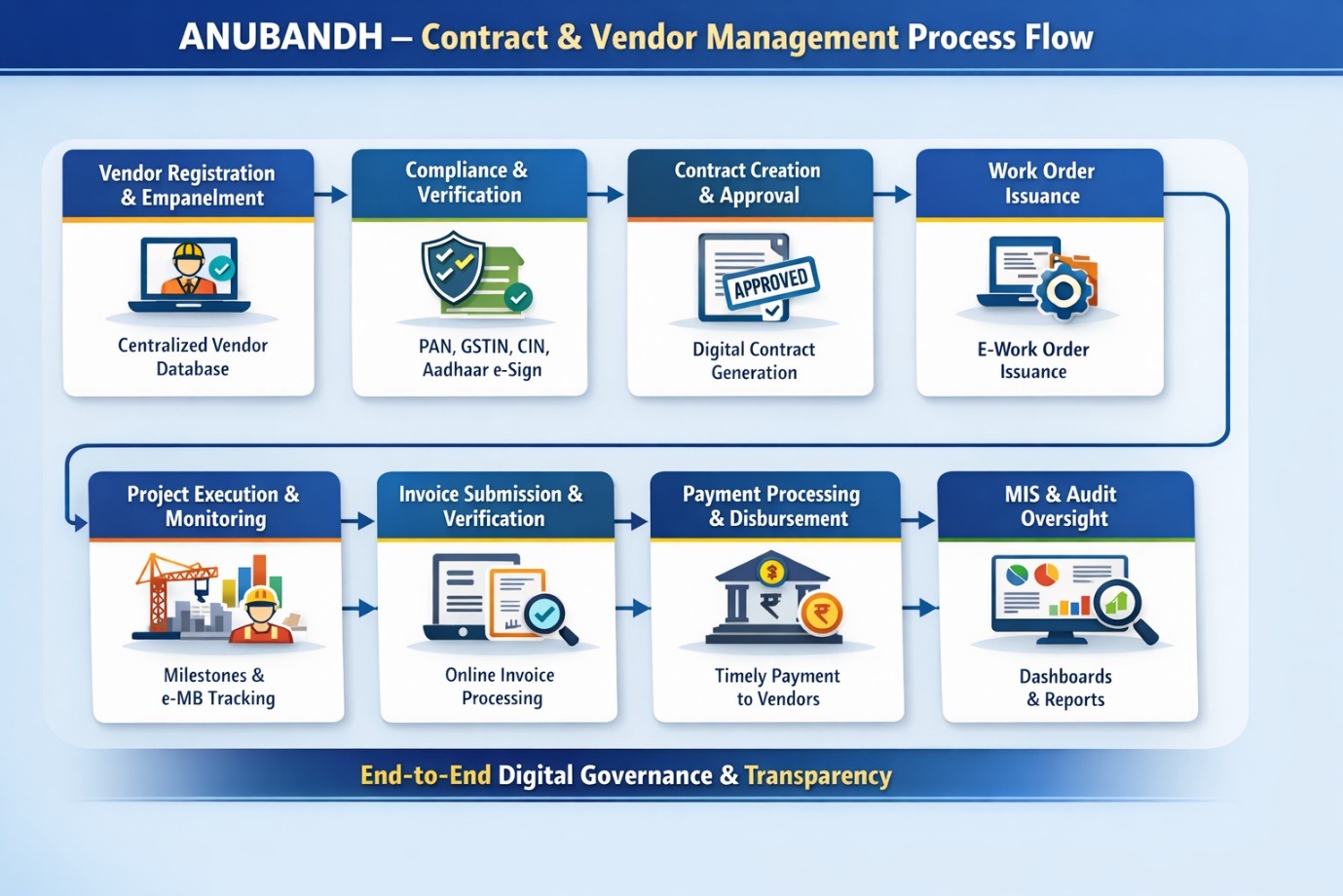
During the execution phase, the conceptual vision of ANUBANDH was translated into a comprehensive digital platform covering the entire contract lifecycle. Functional modules were developed for centralized vendor registration, contract and work order management, project and milestone tracking, invoice submission and verification, and payment processing. Each workflow was designed with clearly defined stages, role-based approvals, and automated validations to ensure consistency, traceability, and compliance across departments.
The platform was integrated with statutory and identity verification systems such as PAN, GSTIN, CIN, DIN, Aadhaar-based e-Sign, and banking interfaces to ensure legal authenticity and financial integrity. Significant emphasis was placed on stakeholder engagement and change management, including training programs for departmental users and vendors. This ensured smooth migration from legacy processes to the new digital system and helped build confidence in adopting standardized, technology-driven workflows.
Beyond functional deployment, the execution phase prioritized governance assurance and system resilience. Robust audit logs, exception handling mechanisms, and configurable rule engines were embedded to support continuous oversight and policy compliance. Dashboards and MIS reports were developed to provide real-time visibility into contract status, financial exposure, timelines, and vendor performance, enabling proactive administrative and financial control.

Implementation: Institutionalization and Continuous Improvement
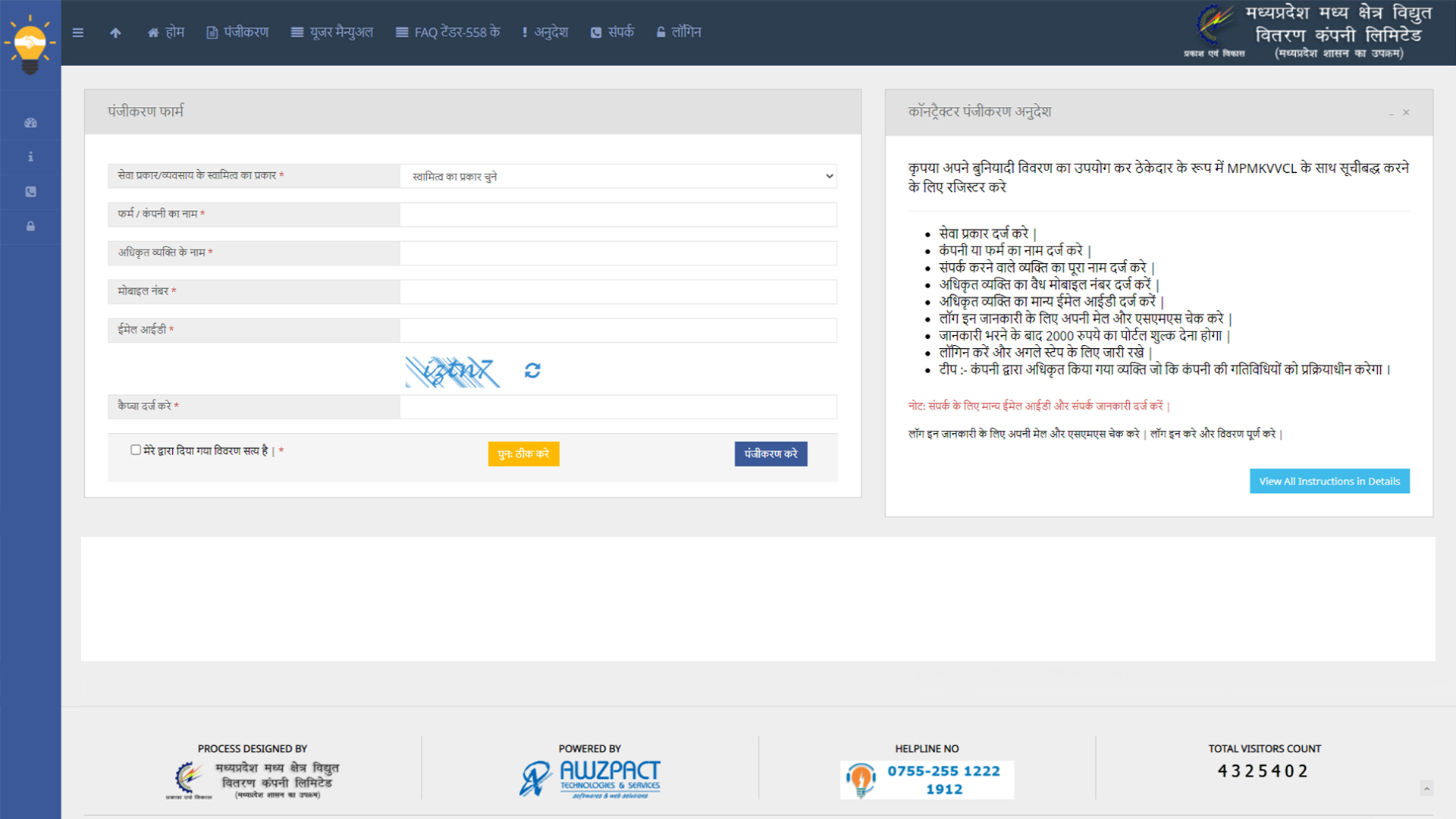
ANUBANDH was implemented as a centralized and mandatory platform for managing vendors, contracts, projects, invoices, and payments, with manual and parallel processes systematically phased out. Governance mechanisms such as role-based access control, approval hierarchies, audit trails, and centralized document repositories were institutionalized to ensure uniform adoption and compliance. The system enabled departments to operate within a clearly defined, rule-based digital environment, reducing dependence on individual discretion.
Post-implementation, continuous monitoring and performance review mechanisms were established through dashboards, MIS reports, and analytics. These tools provided senior management with real-time visibility into vendor performance, contract status, financial exposure, and payment timelines. Feedback from users and operational data insights were used to refine workflows and enhance system capabilities. Through structured institutionalization and continuous improvement, ANUBANDH has evolved into a scalable, sustainable, and future-ready digital governance platform that strengthens transparency, efficiency, and accountability across the contract and vendor management ecosystem.
Collectively, the implementation and institutionalization of ANUBANDH marked a decisive shift in governance culture from reactive oversight to proactive, system-led control.

Enhanced Transparency and End-to-End Traceability
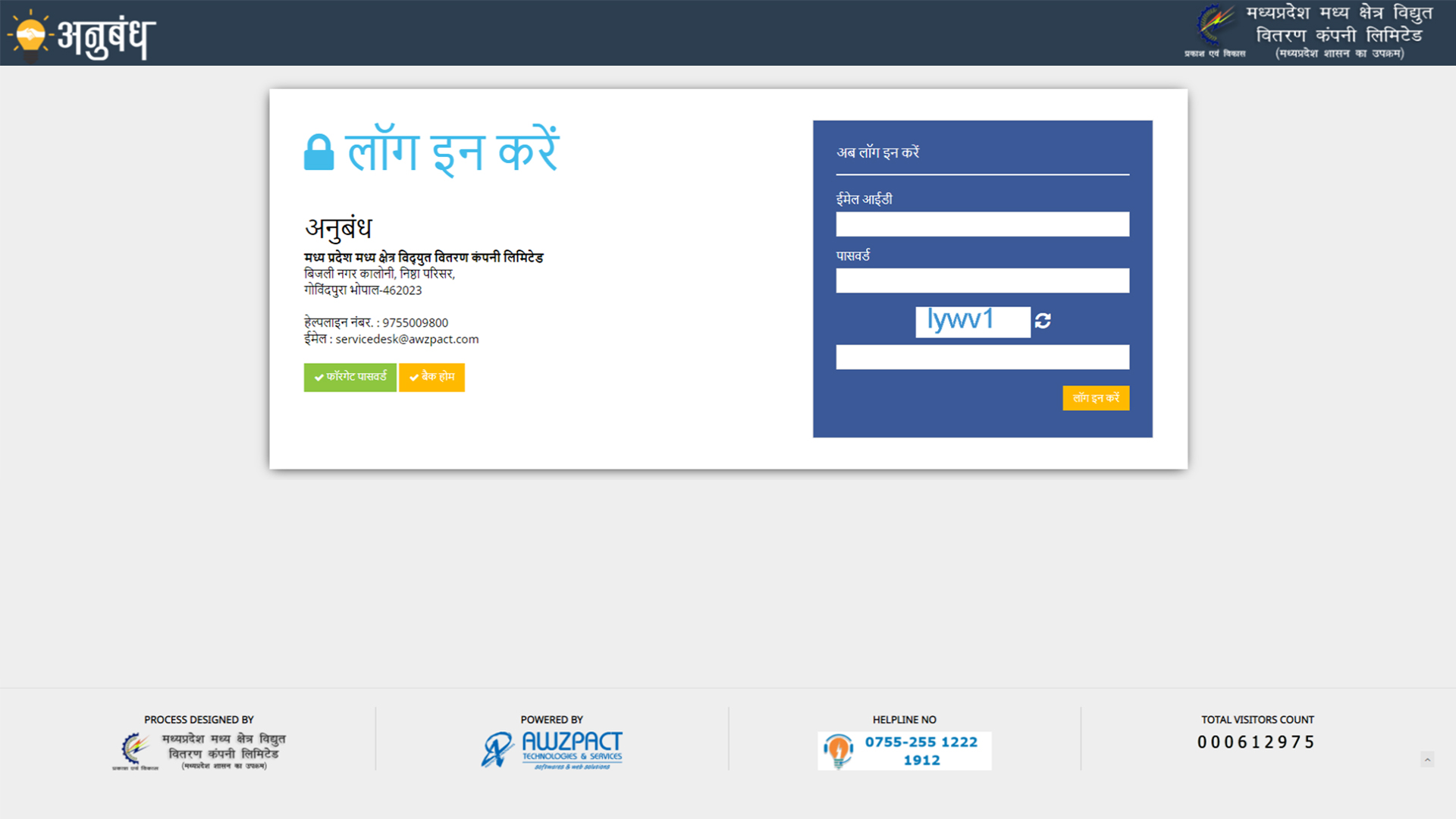
The implementation of ANUBANDH has fundamentally transformed transparency in contract and vendor management by digitizing the entire lifecycle of contractual engagements. Every stage—from vendor registration and empanelment to contract approval, work order issuance, project execution, invoice verification, and payment disbursement—is now captured within a single, integrated digital system. This has eliminated reliance on physical files, informal communication, and offline registers, ensuring that all actions are system-driven, time-stamped, and fully traceable. For governance and audit authorities, ANUBANDH provides a consolidated and reliable digital trail of all contractual and financial transactions. Decision histories, approval logs, statutory compliance records, and financial details are readily accessible, significantly reducing ambiguity and audit effort. This enhanced traceability has strengthened institutional accountability, improved audit readiness, and reinforced public trust in the management of government contracts and expenditures.

Significant Improvement in Operational Efficiency and Turnaround Time
ANUBANDH has delivered substantial improvements in operational efficiency by automating processes that were earlier manual, repetitive, and dependent on physical coordination across departments. Standardized digital workflows have reduced turnaround times for critical activities such as vendor onboarding, contract approvals, work order issuance, invoice scrutiny, and payment processing. The elimination of manual handoffs and file movement has minimized delays and reduced process variability across departments. These efficiency gains have enabled departments to optimize human resources and redirect administrative effort toward supervision, quality control, and policy implementation. Vendors have benefited from faster approvals, predictable processes, and timely payments, resulting in improved confidence and smoother project execution. Overall, ANUBANDH has converted contract management from a bottleneck into a streamlined and reliable operational function.

Strengthened Compliance Framework and Reduced Financial Risk
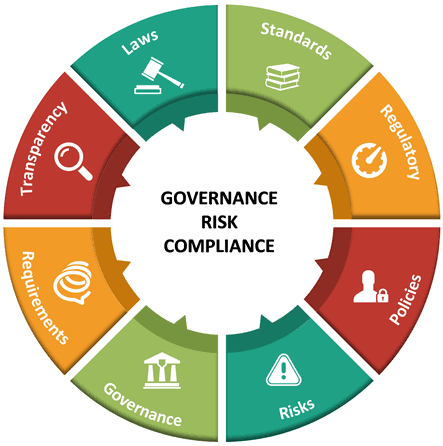
By embedding statutory and regulatory compliance directly into digital workflows, ANUBANDH has significantly reduced the risk of non-compliance and financial irregularities. Automated verification of PAN, GSTIN, CIN, DIN, Aadhaar-based e-Sign, and system-enforced statutory deductions such as GST and TDS ensure that all transactions meet legal and regulatory requirements by design rather than through post-facto checks. From a financial governance standpoint, the platform has enhanced control over public expenditure by providing real-time visibility into contract values, committed liabilities, invoice amounts, and payment obligations. This has reduced the likelihood of duplicate payments, unauthorized expenditures, and reconciliation errors, while strengthening fiscal discipline and ensuring compliance with audit and regulatory standards.
Data-Driven Governance and Improved Decision-Making
ANUBANDH has enabled a shift from reactive management to proactive, data-driven governance by providing real-time dashboards, MIS reports, and analytical insights. Senior leadership can now monitor vendor performance, contract execution status, financial exposure, and payment timelines across departments through a single, consolidated interface. This visibility supports timely interventions, better prioritization, and informed supervisory action. The availability of structured and reliable data has also enhanced planning and policy formulation. Departments can analyze historical performance, identify recurring bottlenecks, assess vendor reliability, and optimize procurement and contract strategies. As a result, decision-making has become more evidence-based, strategic, and aligned with organizational and financial objectives.

Institutionalization of a Scalable and Sustainable Digital Governance Model
Beyond immediate operational outcomes, ANUBANDH has institutionalized a scalable and future-ready governance framework for contract and vendor management. The platform’s modular architecture, standardized workflows, and interoperability make it adaptable to evolving policy requirements, increased transaction volumes, and integration with other enterprise and governance systems. By embedding transparency, accountability, compliance, and performance monitoring into routine operations, ANUBANDH has transformed contract management into a core governance function rather than a transactional activity. The initiative now stands as a replicable best-practice model for public sector organizations seeking to modernize contract management, strengthen institutional capacity, and ensure long-term sustainability of governance reforms.